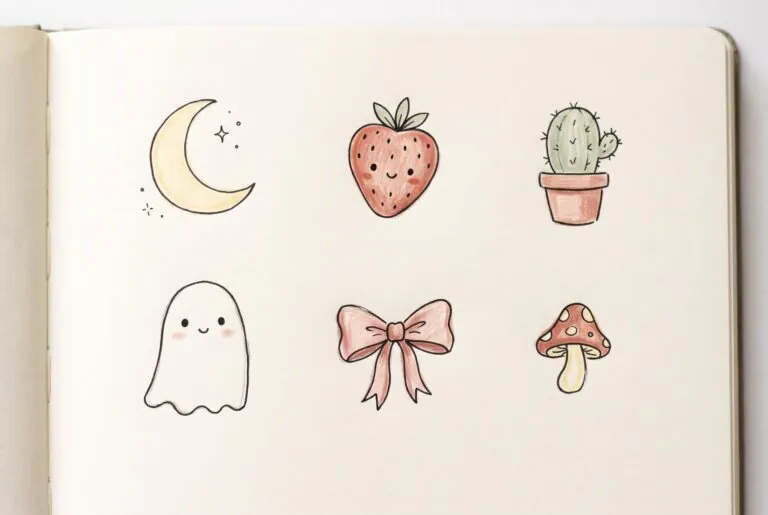
Aesthetic Drawing Ideas: 20 Pretty Sketches to Try
Looking for drawing ideas aesthetic enough to make you want to open your sketchbook? Start small. A single wildflower, a ribbon bow, or a rainy window can feel more inviting than a complicated scene. These 20 aesthetic drawing ideas focus on recognizable shapes, pleasing details, and simple techniques you can adapt to your own style.
Most of these pretty sketches work with an ordinary pencil and an eraser; a fine-liner or a few colored pencils are optional. Choose the subject that catches your eye, draw lightly to map its main shapes, and add texture or shading only after the proportions feel right. You do not need a perfect page to make a lovely one. If choosing a subject feels like the hardest part, our drawing ideas for when you don’t know what to draw can help you settle on a starting point.
A Few Tips Before You Start
Keep a scrap of paper nearby to test strokes, begin with the largest shape instead of tiny details, and pick one light source when shading. If you prefer simple aesthetic drawing ideas, limit yourself to five or ten minutes per sketch. Repeated motifs look especially good on a sketchbook spread when you vary their scale and leave deliberate white space.
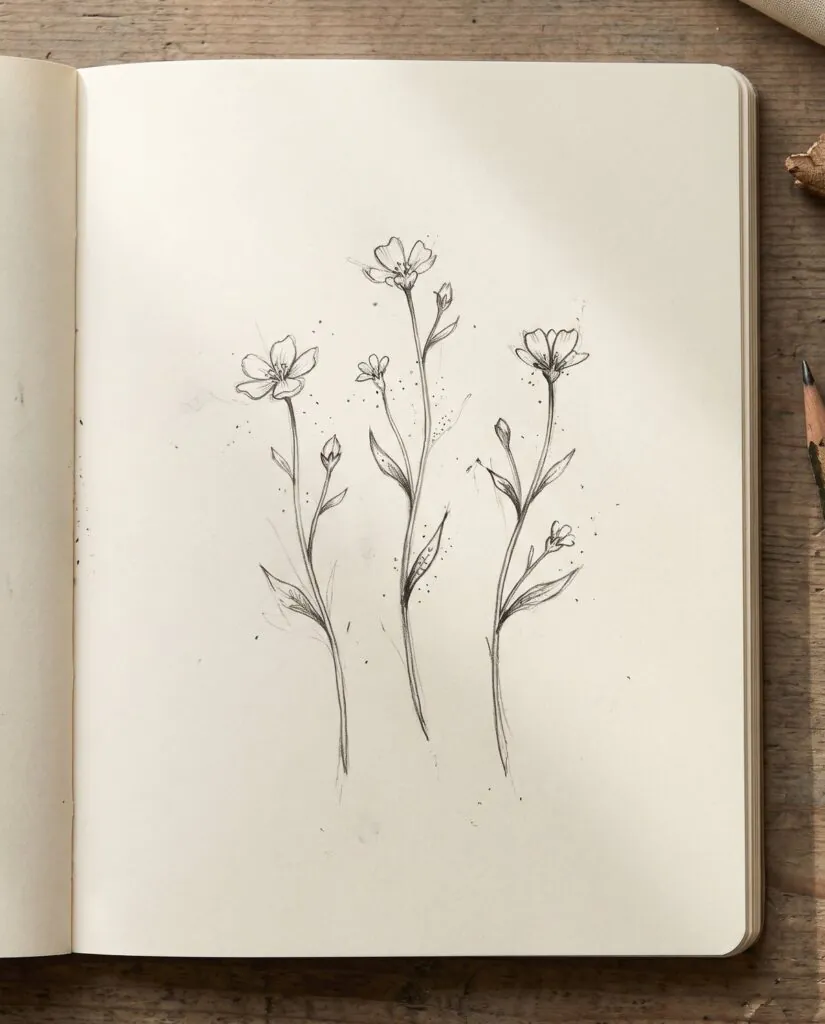
1. Delicate Wildflower Stems
Three thin wildflower stems with uneven petals, small leaves and airy gaps. Begin with three sweeping stem lines, then attach petals as simple ovals or teardrops. Keep the flower heads different sizes and darken only one side of each stem. This idea works in graphite pencil, and you can keep it minimalist or add a little personal detail without turning it into a full illustration. Leave a few petals unfinished for an airy, botanical-study feel.
2. A Crescent Moon with Tiny Stars
A slender crescent floating among irregular hand-drawn stars. Sketch two overlapping arcs, erase the unwanted inner section, and place stars with plenty of breathing room. Vary star sizes; use a few dots instead of filling every empty patch. This idea works in ink and graphite, and you can keep it minimalist or add a little personal detail without turning it into a full illustration. The contrast between a large moon and tiny scattered marks makes the page feel balanced.

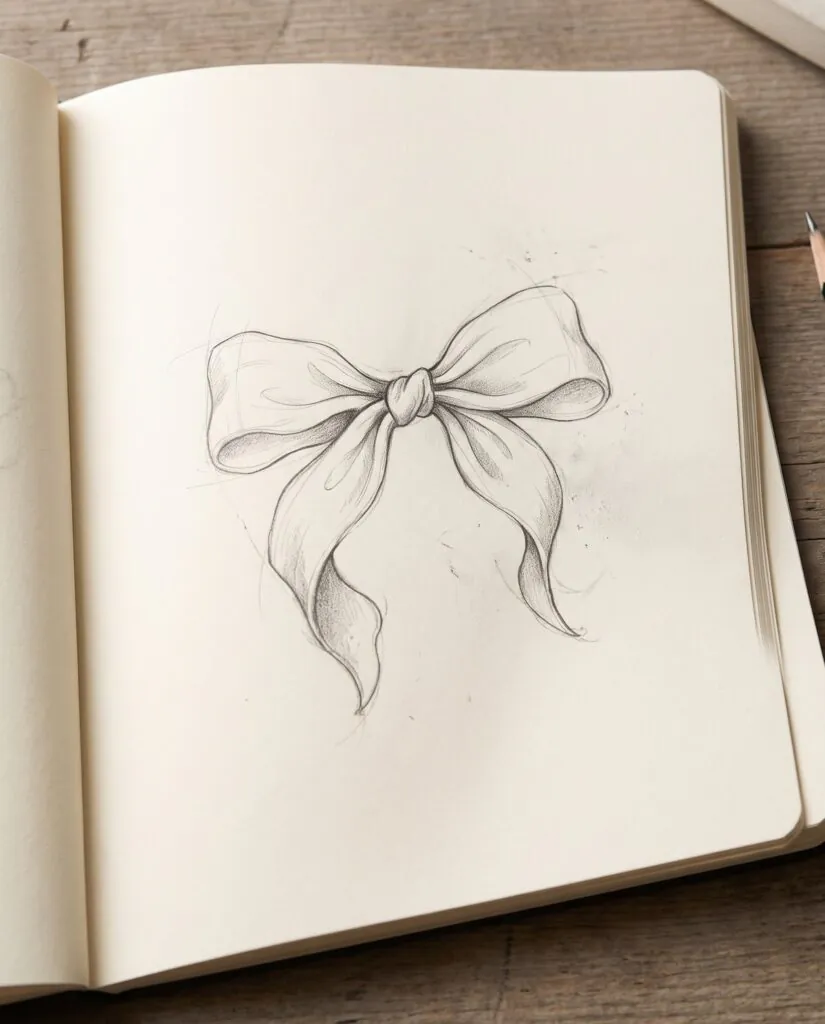
3. A Bow with Soft Ribbon Folds
A loose fabric bow with two loops and curling tails. Draw the center knot first, build each loop as a folded ribbon shape, then add two hanging ends. Shade directly beneath the knot to give the fabric believable depth. This idea works in graphite pencil, and you can keep it minimalist or add a little personal detail without turning it into a full illustration. A loose outline often looks more convincing than carefully repeated, identical folds.
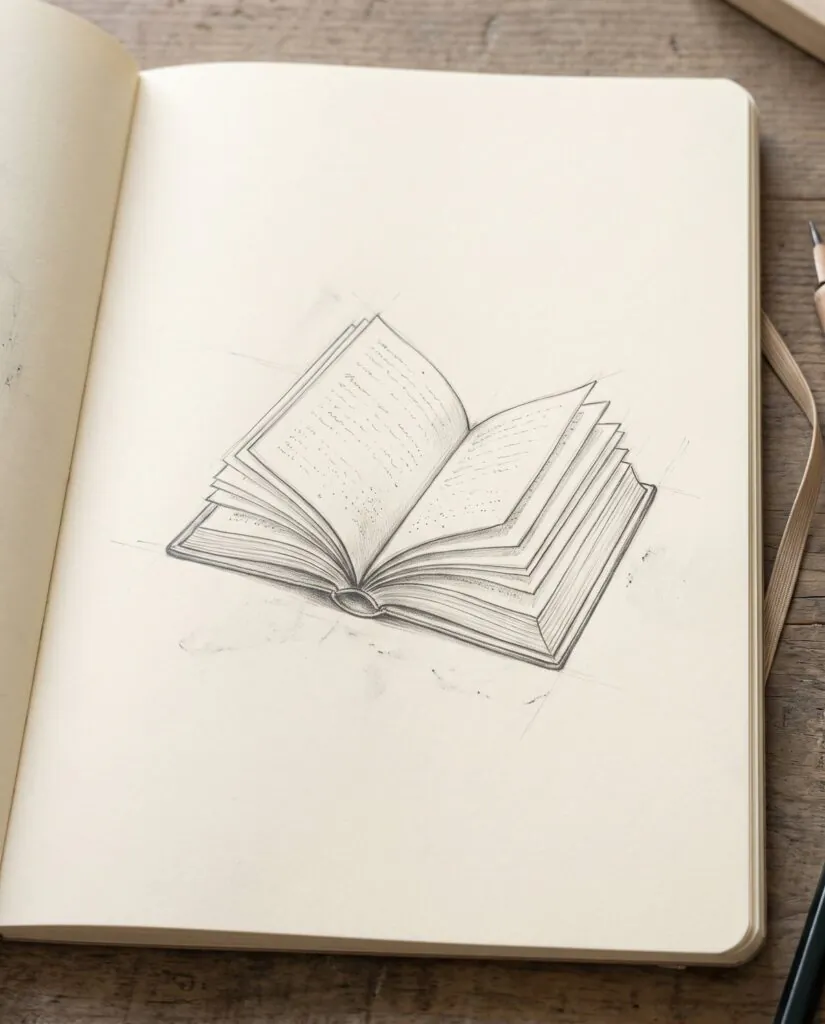
4. An Open Book with Curving Pages
A small open book viewed from slightly above, with gently fanned pages. Mark a central spine and draw two mirrored page shapes before adding thinner page edges. Keep the outer edges curved; ruler-straight rectangles will make the book feel stiff. This idea works in graphite pencil, and you can keep it minimalist or add a little personal detail without turning it into a full illustration. A tiny shadow under the spine is enough to make the book sit on the page.
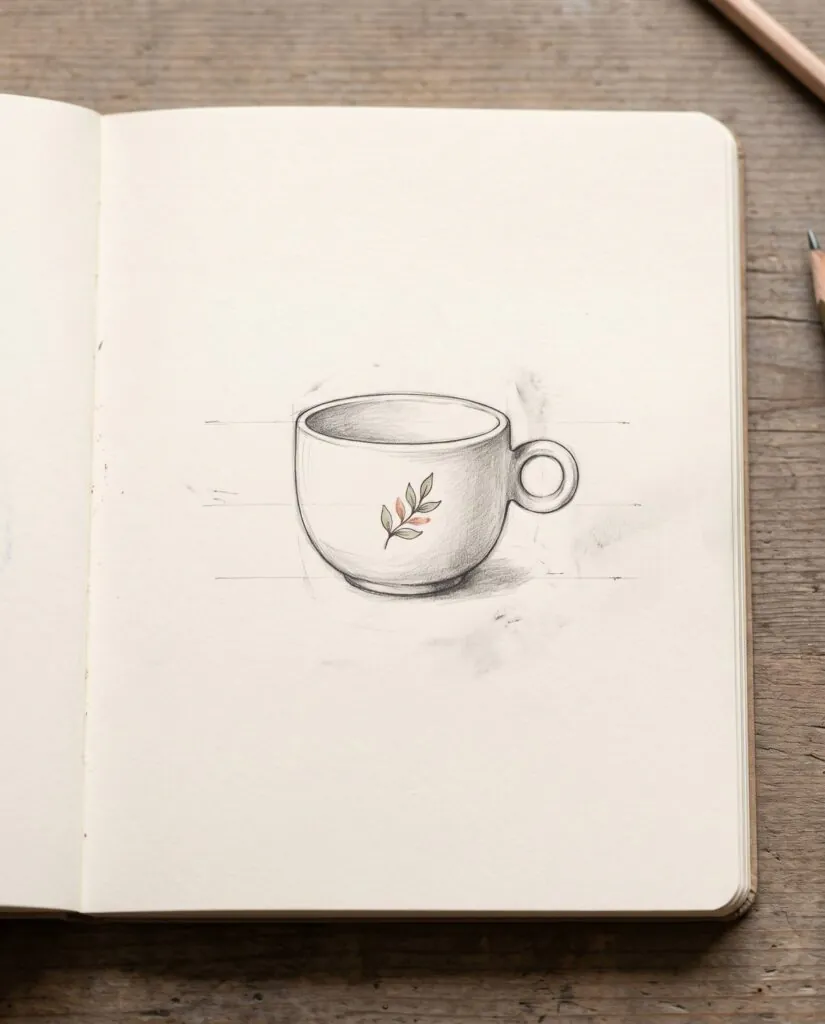
5. A Teacup with Botanical Details
A simple ceramic cup decorated with one tiny leafy motif. Start with the elliptical rim, taper the cup to its base, then draw the handle as two related curves. Make the upper and lower rim ellipses consistent; add muted color sparingly. This idea works in ink and colored pencil, and you can keep it minimalist or add a little personal detail without turning it into a full illustration. An understated leaf design on the cup connects this sketch with the botanical ideas in the collection.
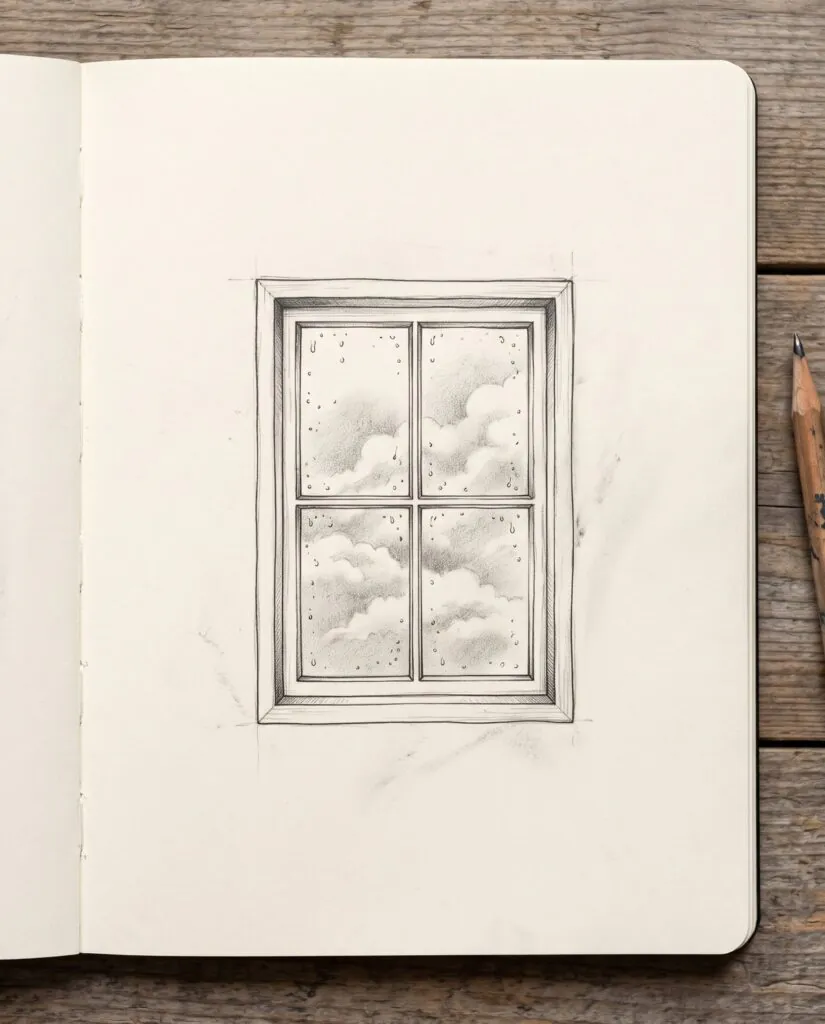
6. A Little Window with Rain Streaks
A rectangular window looking onto soft clouds, with droplets on the glass. Frame the window with parallel verticals and horizontals, then place irregular raindrops near the edge. Suggest weather using selective dark marks rather than filling the entire pane. This idea works in graphite and ink, and you can keep it minimalist or add a little personal detail without turning it into a full illustration. The most atmospheric part of this drawing is the difference between the sharp frame and soft view beyond it.
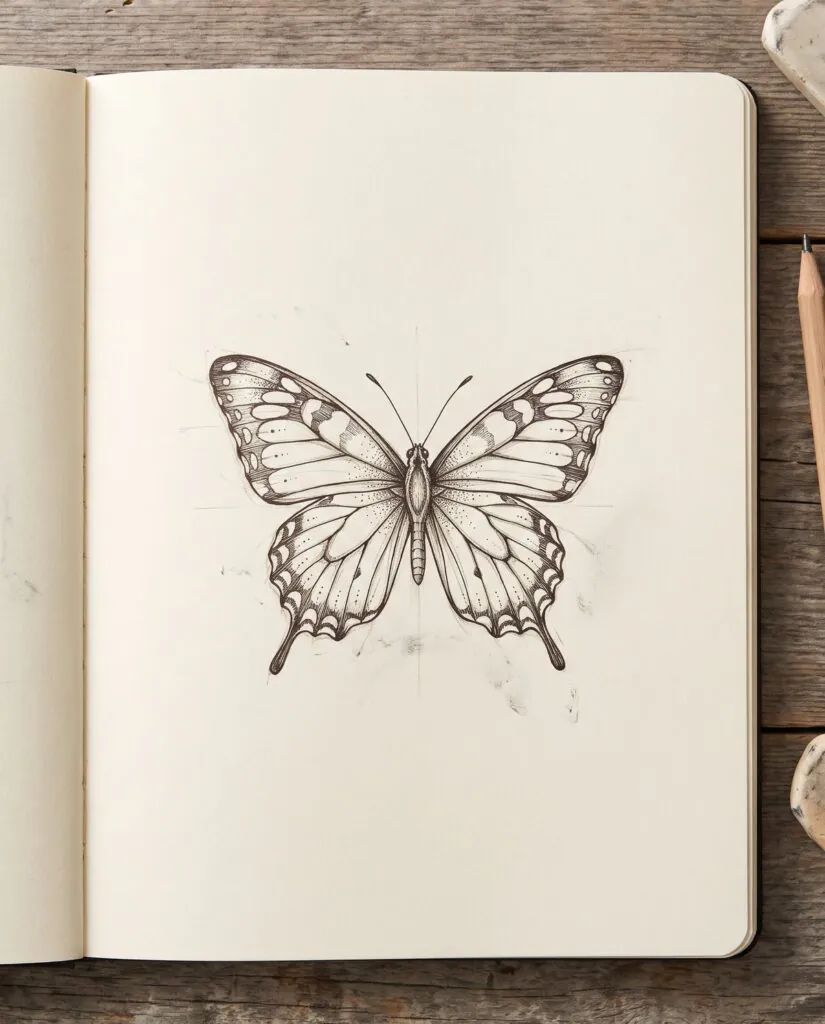
7. A Butterfly in Fine Linework
A butterfly with slightly asymmetrical veining and a slim body. Lay out a vertical body line, sketch broad upper wings and smaller lower wings, then add interior veins. Compare wing silhouettes before working on patterns; symmetry need not be mechanically perfect. This idea works in fine-line ink, and you can keep it minimalist or add a little personal detail without turning it into a full illustration. Pause to compare the left and right wing widths before committing to ink.
8. Strawberries on a Small Branch
Two ripe strawberries with pointed leaves and tiny seed marks. Block each fruit as a rounded triangle, attach a star-like leafy crown, then shade the sides. Use short seed marks that follow the rounded surface rather than a flat grid. This idea works in colored pencil, and you can keep it minimalist or add a little personal detail without turning it into a full illustration. A pale pink underlayer and richer red around the edges create a soft colored-pencil finish.

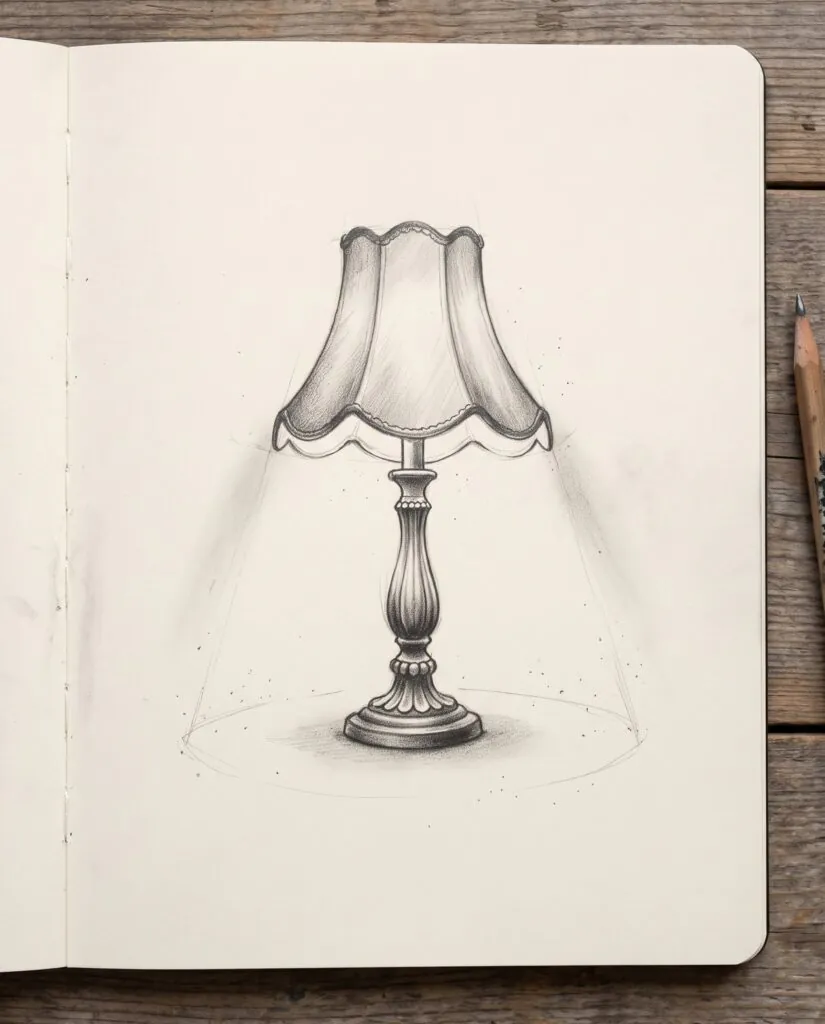
9. A Cozy Table Lamp
A scalloped lampshade casting a quiet pool of light. Build the shade from a broad trapezoid, curve its lower edge, and add a narrow base. Make the area beneath the shade darker; leave the lit paper mostly untouched. This idea works in graphite pencil, and you can keep it minimalist or add a little personal detail without turning it into a full illustration. Place the lamp slightly off-center if you want to turn the sketch into a small room vignette.
10. A Matchbox with a Tiny Illustration
A vintage-inspired matchbox with a simple drawn flower on its face. Use a slightly angled rectangle for the box, add a sliding inner tray, then center a miniature floral icon. Keep the lettering off the box so the illustration remains the focus. This idea works in ink and colored pencil, and you can keep it minimalist or add a little personal detail without turning it into a full illustration. This is also a playful way to practice drawing an object with a flat front and visible side.

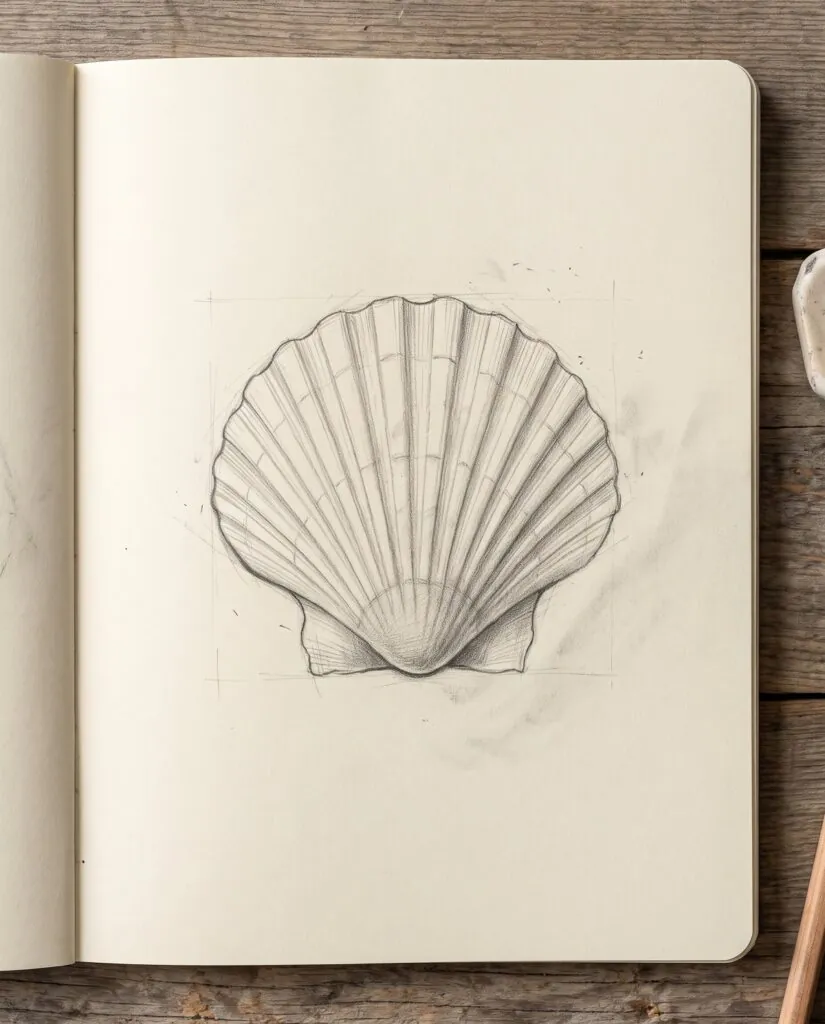
11. A Seashell with Repeating Ridges
A scallop shell with radiating ribs and a softly shaded lower hinge. Sketch a fan silhouette, identify the hinge, and draw ridges that spread outward from that point. Let the grooves bend with the shell instead of making evenly spaced straight stripes. This idea works in graphite pencil, and you can keep it minimalist or add a little personal detail without turning it into a full illustration. Start with only six or seven ribs; you can add finer ones once the fan shape feels right.
12. A Stack of Three Candles
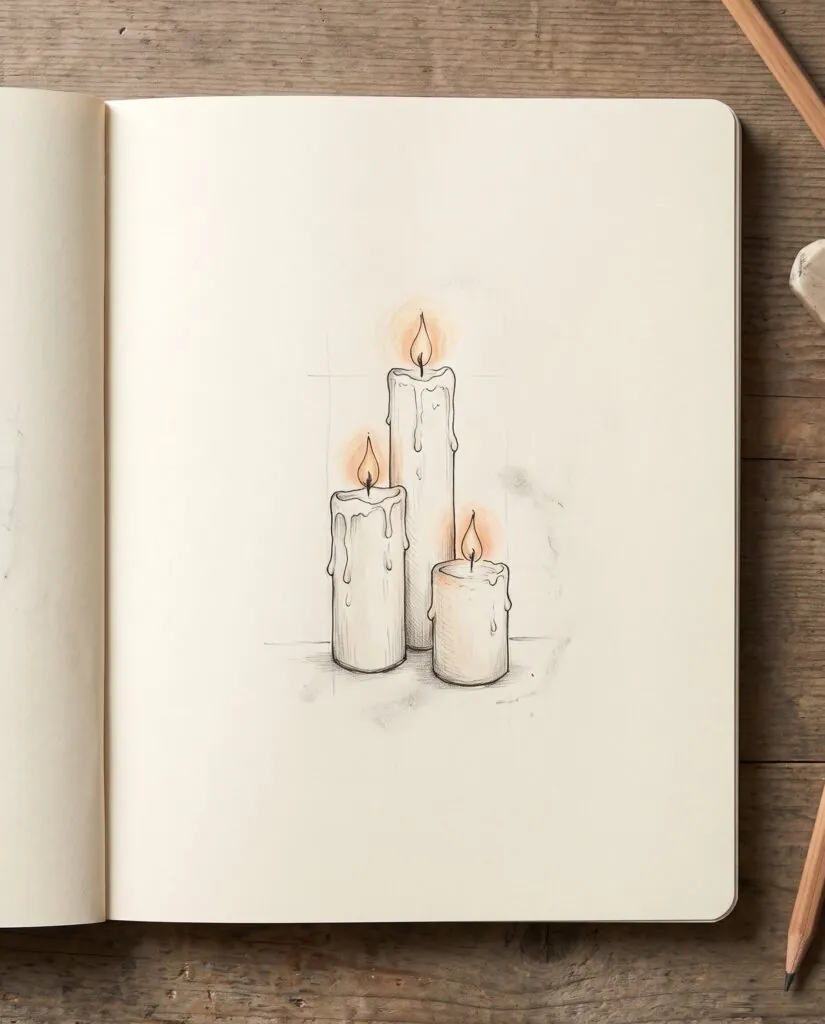
Three candles of different heights with naturally uneven wax drips. Draw the wax cylinders and oval tops first, then trail drips down selected edges. Give each flame a distinct shape and leave small highlights in the wax. This idea works in colored pencil and ink, and you can keep it minimalist or add a little personal detail without turning it into a full illustration. Try cream, rust, and dusty rose for a restrained color story.
13. A Dainty Perfume Bottle
A faceted vintage-style perfume bottle with a rounded stopper. Begin with a vertical centerline, balance the bottle shoulders, then add a narrow neck and stopper. Use a few crisp angled lines to suggest glass; heavy shading can obscure it. This idea works in graphite pencil, and you can keep it minimalist or add a little personal detail without turning it into a full illustration. A few unshaded facets keep the glass airy instead of looking like solid stone.

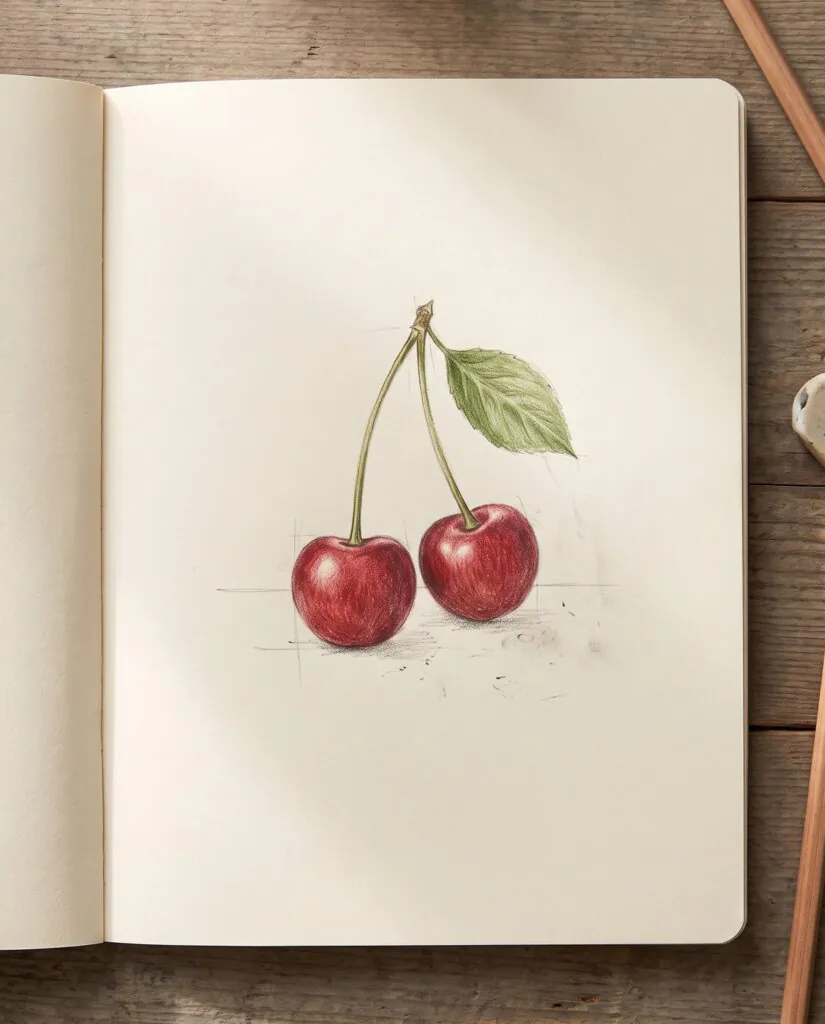
14. A Pair of Cherries with Joined Stems
Two cherries hanging from fine connected stems with a single leaf. Make two slightly different circles, connect their stems, and indicate the leaf with one folded line. Put highlights on the same side of both fruits to keep the light believable. This idea works in colored pencil, and you can keep it minimalist or add a little personal detail without turning it into a full illustration. One slightly smaller fruit gives the pair a more natural silhouette.
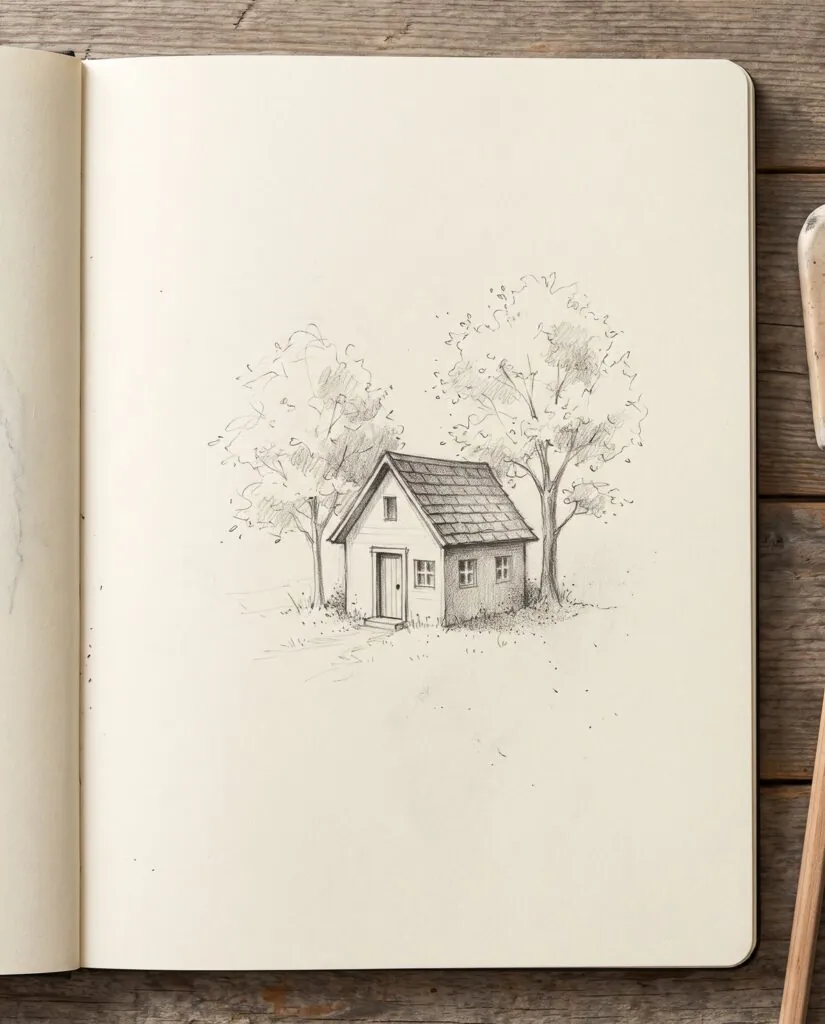
15. A Tiny House Among Trees
A simple cottage with pitched roof, narrow door, and two airy trees. Sketch the house as a rectangle topped with a triangle, then place trees behind it at different heights. Choose a straightforward frontal view; if you angle the house, keep roof and wall edges consistent. This idea works in graphite pencil, and you can keep it minimalist or add a little personal detail without turning it into a full illustration. A lightly indicated path or doorstep can anchor the cottage without requiring a whole landscape.
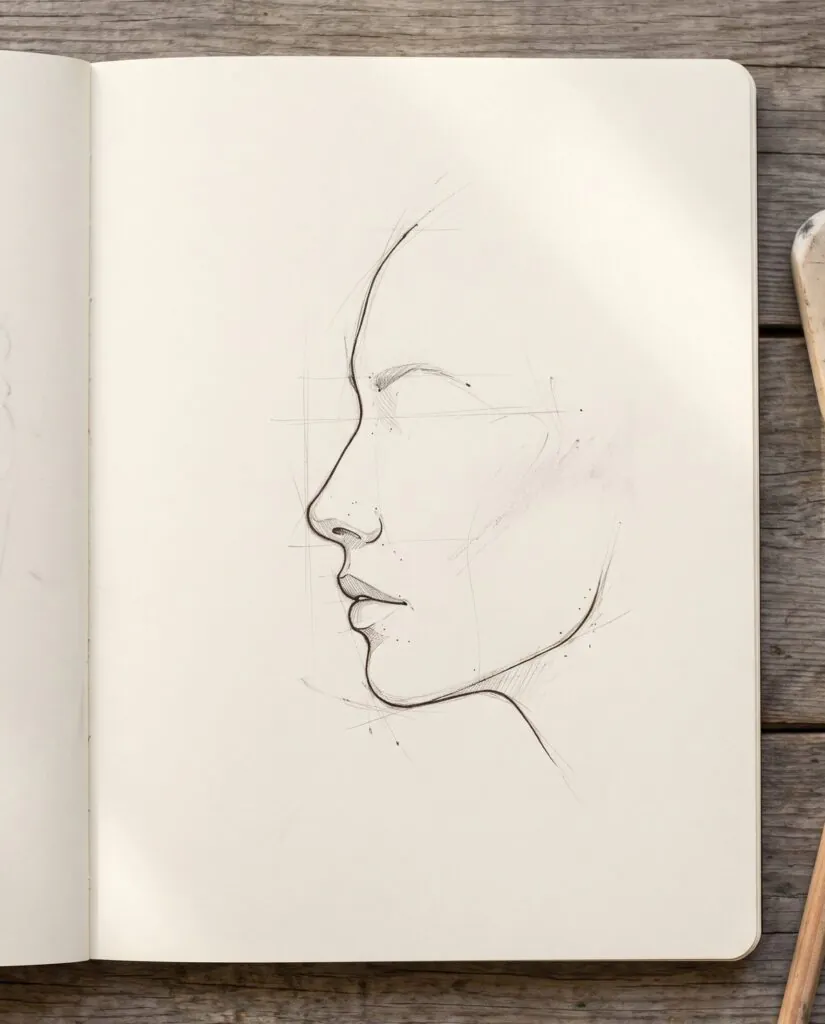
16. A Line-Art Face in Profile
A minimal side profile defined by forehead, nose, lips and chin. Draw a light gesture line for the head angle, then refine the silhouette in one connected contour. Study the negative space around the nose and lips rather than symbol-drawing each feature. This idea works in graphite and fine-line ink, and you can keep it minimalist or add a little personal detail without turning it into a full illustration. If a continuous line feels tricky, use several connected pencil strokes and trace over them later.
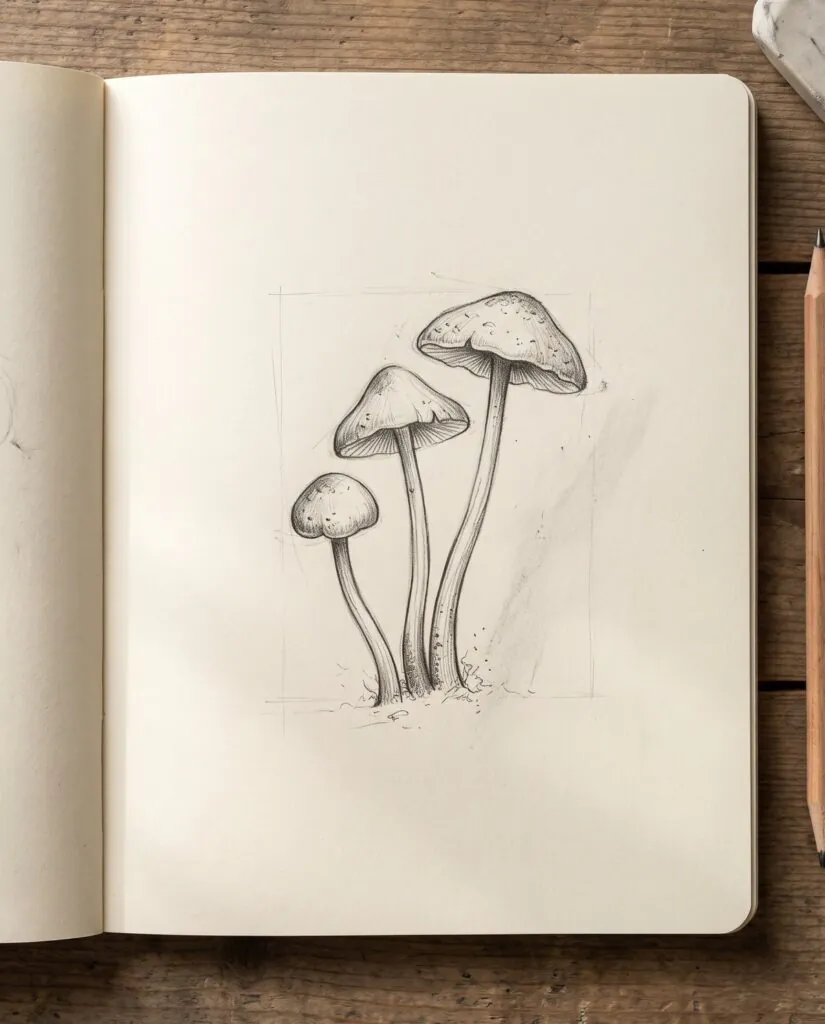
17. A Mushroom Cluster with Textured Caps
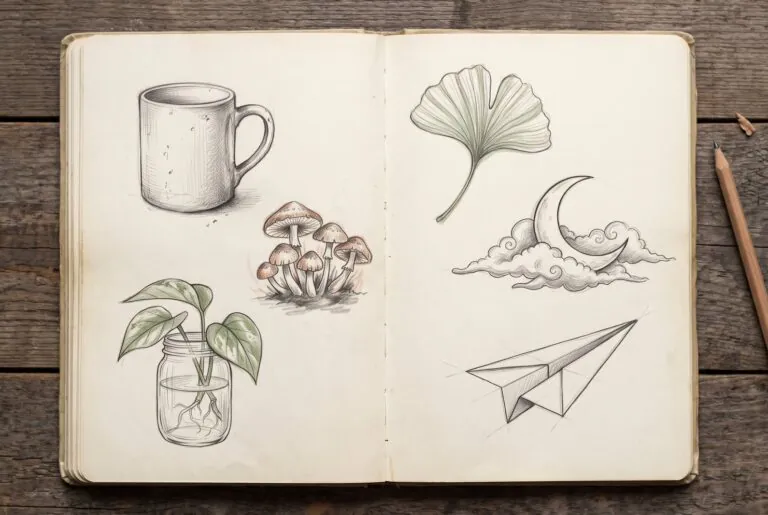
Three small mushrooms with different cap widths and slim stems. Block the largest cap as a rounded dome and overlap two smaller mushrooms behind it. Use closely spaced lines beneath the caps for gills without overworking the entire drawing. This idea works in graphite pencil, and you can keep it minimalist or add a little personal detail without turning it into a full illustration. Different cap angles create more interest than repeating the exact same mushroom three times.
18. A Vase of Tulips
Three tulips in a narrow vase with long arching leaves. Outline the vase first, arrange the flower heads at staggered heights, then connect them with flowing stems. Overlap petals subtly and use a limited two-color palette for a cohesive finish. This idea works in colored pencil, and you can keep it minimalist or add a little personal detail without turning it into a full illustration. The stems should cross behind the vase opening rather than appear pasted onto the glass.

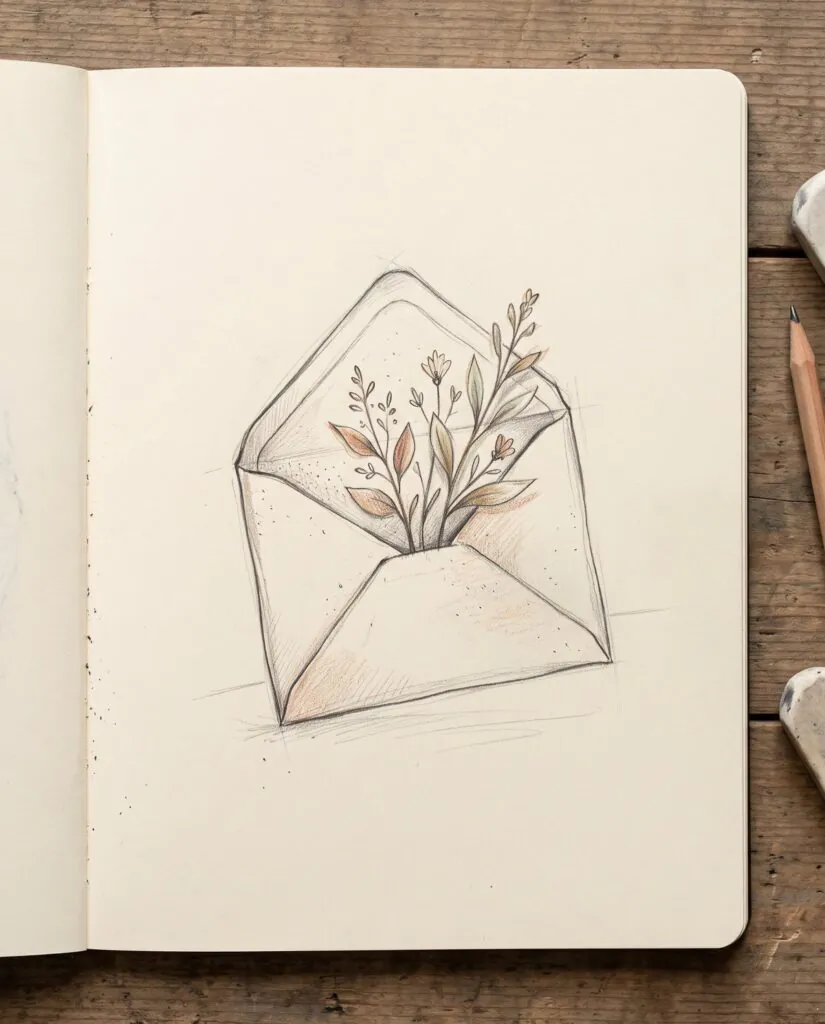
19. An Envelope with Pressed Flowers
A partially open envelope with a few flat stems tucked inside. Draw a broad envelope rectangle, add the triangular flap, then let two stems emerge from the opening. Keep flowers small enough to look tucked into the paper, not floating above it. This idea works in graphite and muted colored pencil, and you can keep it minimalist or add a little personal detail without turning it into a full illustration. A small overlap where the stems meet the flap makes the paper-and-flower layers readable.
20. A Mini Sketchbook Shelf
A short shelf holding a few leaning notebooks, a pot and an art pencil jar. Start with the straight shelf line and group books as narrow, slightly tilted rectangles. Allow overlaps and use different book heights so the scene looks collected rather than uniform. This idea works in ink and graphite, and you can keep it minimalist or add a little personal detail without turning it into a full illustration. This is a good exercise in arranging several simple shapes into one coherent composition.

How to Make Your Sketchbook Look Cohesive
You do not need to draw every subject in the same style. A page can still feel collected when you repeat one or two choices: the same soft graphite shading, a muted accent color, or similar margins around each sketch. Mix close-up objects with a few little scenes, and leave space between drawings so their silhouettes remain easy to read.
If you are not sure what to draw next, choose the simplest object in front of you and give it one interesting feature—a folded edge, glossy highlight, patterned surface, or curved shadow.
Final Thoughts: Drawing Ideas Aesthetic Enough to Revisit
The best aesthetic sketches are not necessarily the most elaborate. A few carefully observed shapes, a soft shadow, and a little empty space can turn an everyday object into something worth keeping. Pick one of these 20 ideas, make a quick first version, and redraw it another day with a different medium or composition. Your sketchbook will develop its own look as you go.