Simple Things to Draw: 20 Easy Ideas for Your Sketchbook
When a sketchbook page feels too empty, you do not need an elaborate illustration to fill it. Some of the best simple drawing ideas come from things already within reach: a key, a spoon, a folded towel, or a paper roll. Drawing familiar objects gives you a chance to notice shape, proportion, and light without inventing a whole scene.
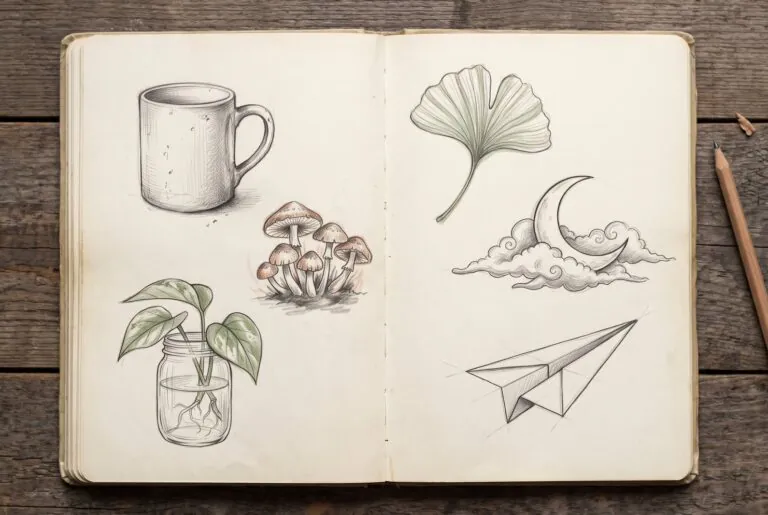
This collection focuses on easy drawing ideas that teach one small skill at a time. You can use a pencil and ordinary paper, work from a real object or the suggested shape, and stop when the basic form looks right. If you would rather start with a wider range of prompts, drawing ideas for those moments when you do not know what to draw offer another starting point.
Before You Start: Keep Your Supplies Simple
Keep a pencil, eraser, and sketchbook nearby. Choose a small object, place it under steady light, and look for its largest shape before drawing the details. These basic drawing ideas use contours, ellipses, overlapping edges, and small areas of shading; you do not need special tools or realistic rendering skills. Work lightly at first, and use only a few dark lines when the proportions feel close.
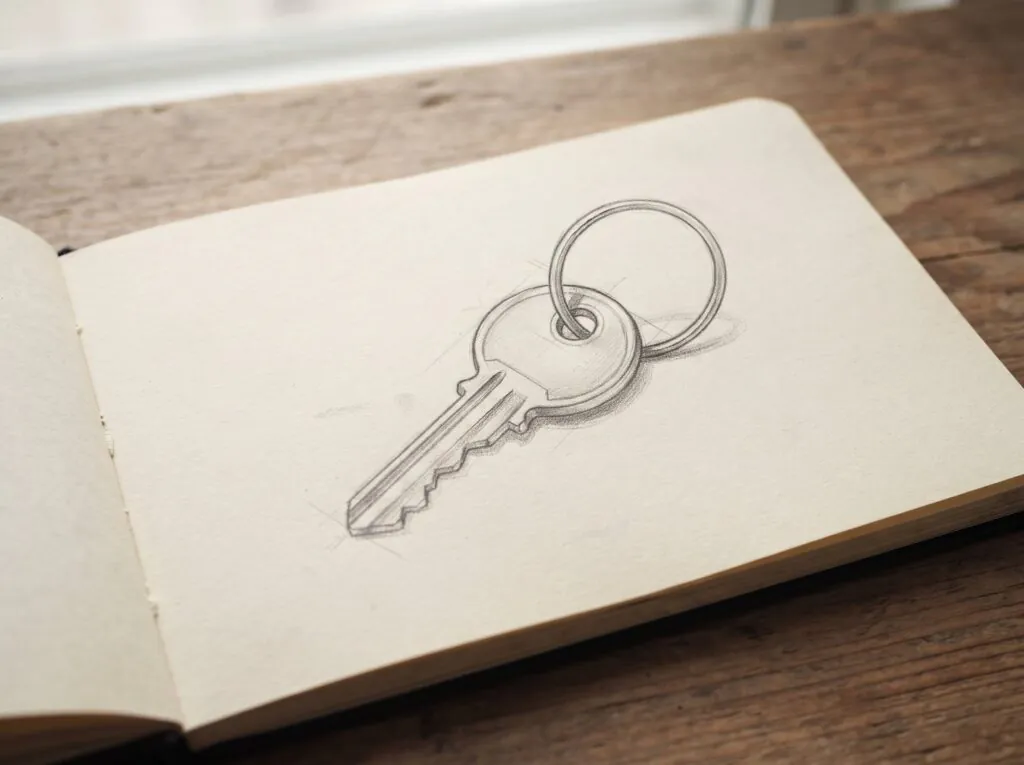
1. A Key on a Keyring
Outline the key’s round head, narrow shaft, and two or three teeth. Draw the metal ring as two slightly offset circles, leaving a small gap where the key overlaps it. Shade only beneath the ring to separate the two parts.
2. A Standing Toilet Paper Roll
Begin with a light oval at the top, then two parallel sides and a shallow curved base. Add a smaller oval inside the top opening. Shade one side with gentle vertical strokes, leaving the paper mostly white.

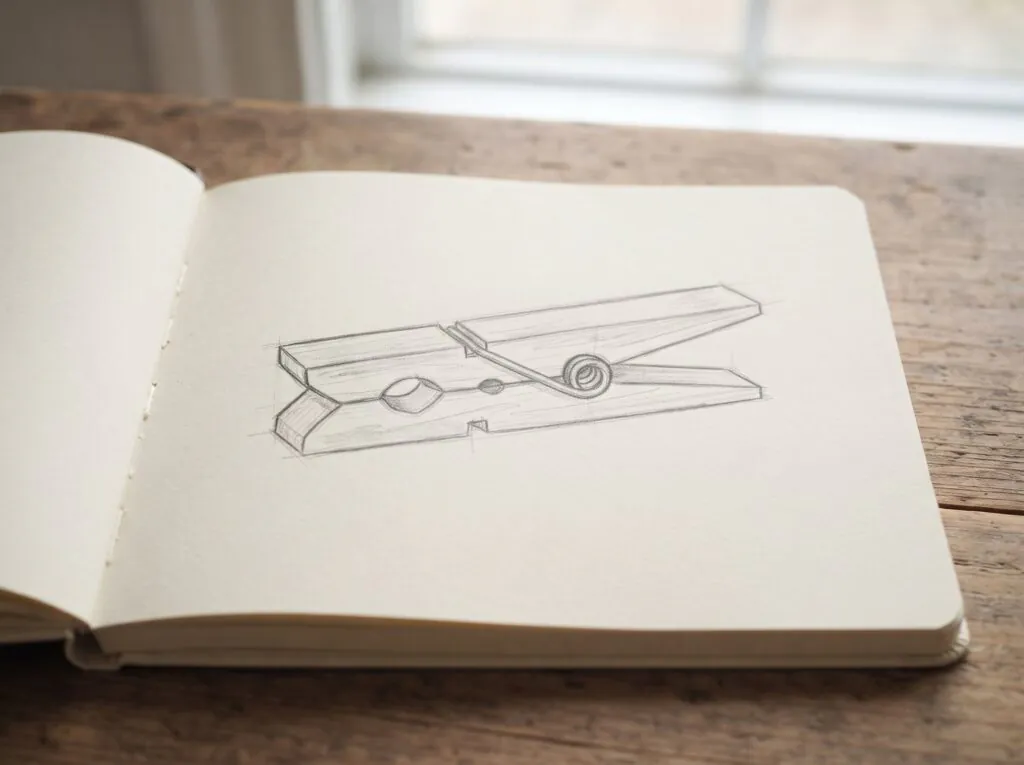
3. A Clothespin Seen from the Side
Use two narrow, slightly tapered wooden halves and a small circle for the spring. Keep the halves nearly parallel, then mark the open notch at one end. Use a few fine strokes to suggest wood grain without drawing every fiber.
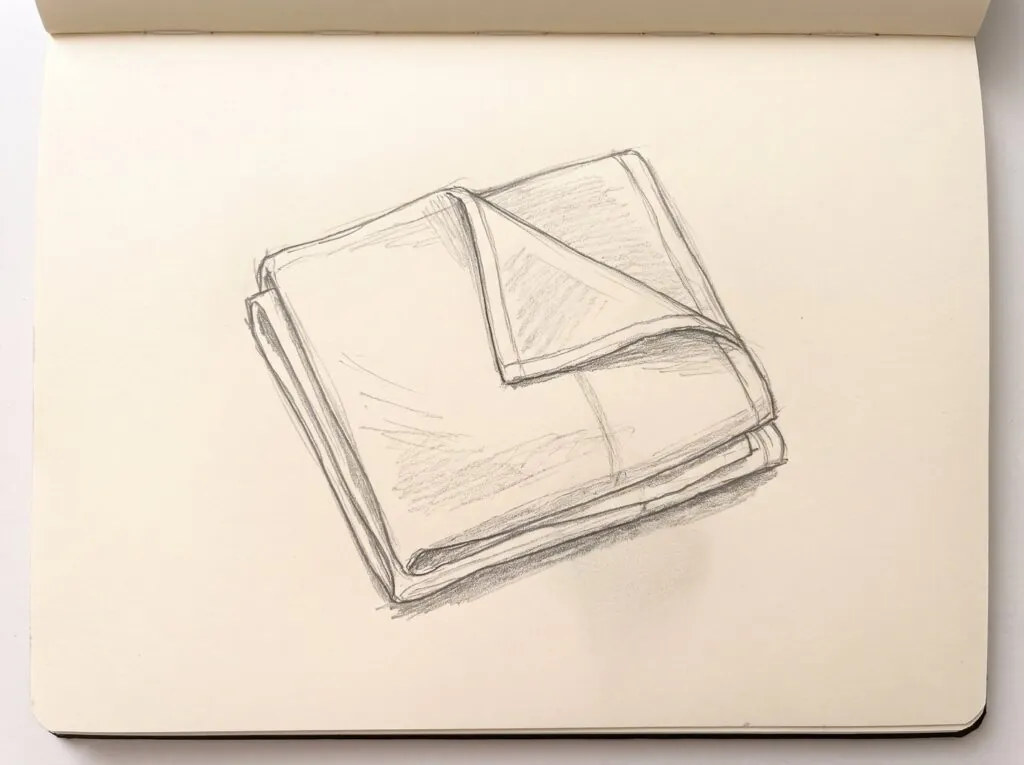
4. A Folded Dish Towel
Draw a low rectangle with one corner folded back into a triangle. A second line along the exposed edge suggests fabric thickness. Shade just inside the fold and leave the flat surface pale; the shape matters more than fabric detail.
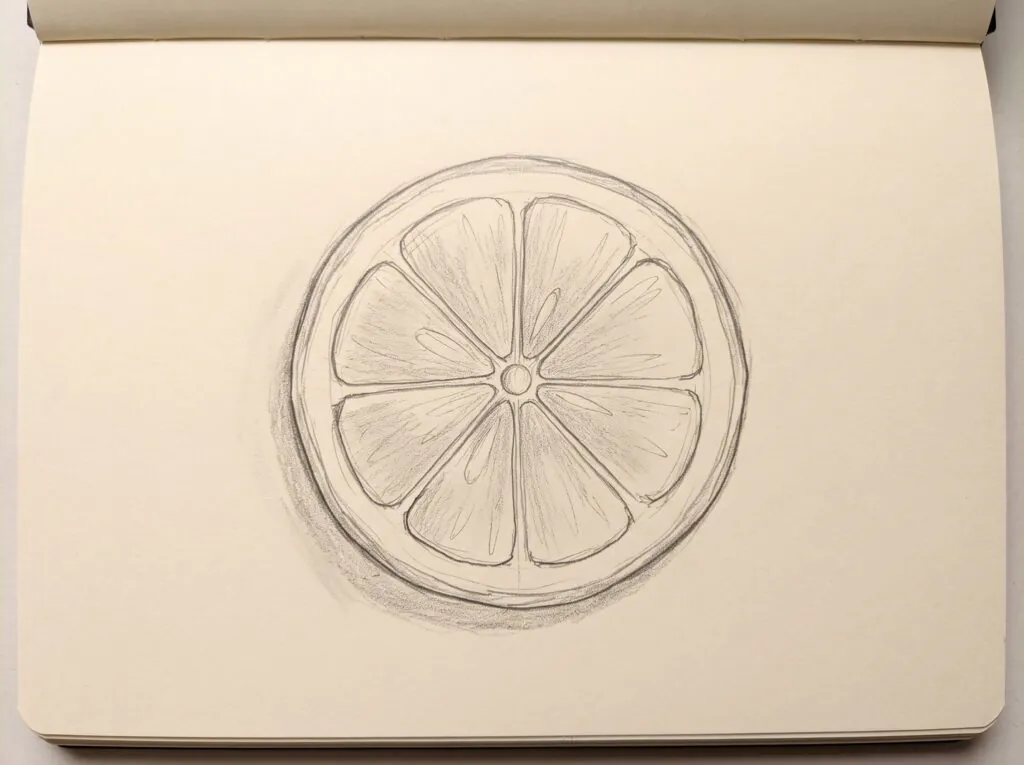
5. A Lemon Cut in Half
Start with a slightly imperfect circle and a narrow rind band. Mark a tiny center, then divide the interior into six or eight wedge shapes with light lines. Add tiny irregularities to the sections without turning it into a complicated botanical study.
6. A Pair of Scissors Lying Closed
Sketch two narrow blade shapes meeting at a small screw. Add two oval handle openings, making one slightly larger than the other. Follow the actual overlap at the pivot rather than outlining every hidden edge.

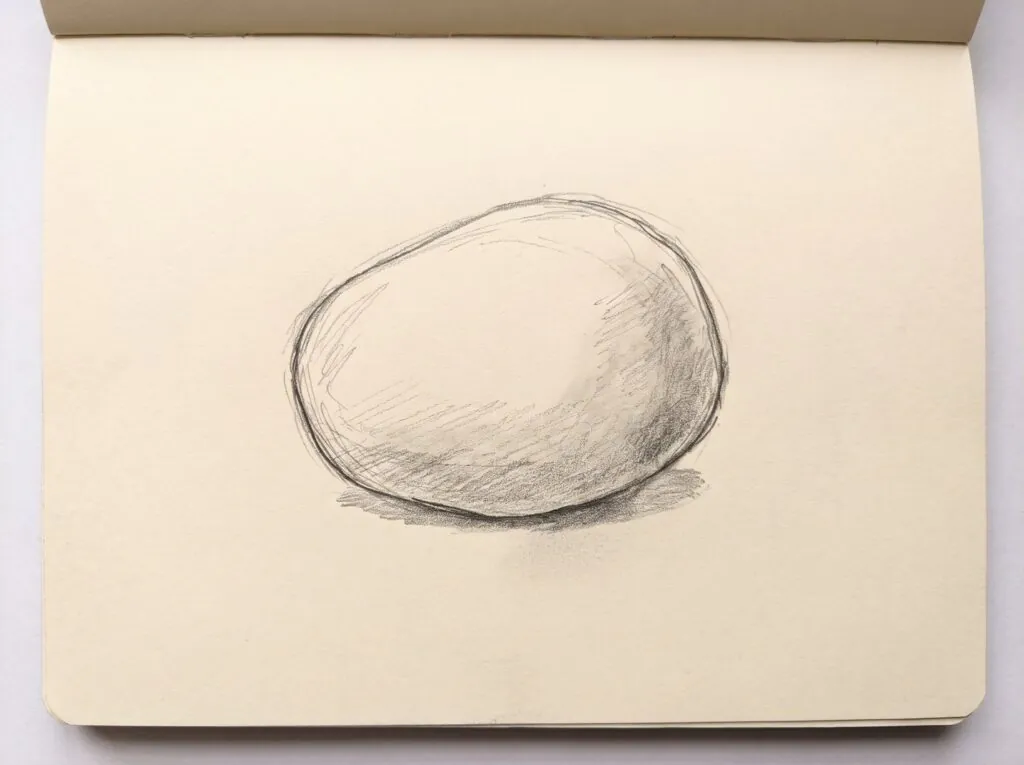
7. A Pebble with One Dark Side
Use a lopsided oval rather than a perfect circle. Choose a light direction and build a small gradient along the opposite edge with soft pencil strokes. Leave a narrow highlight untouched to make the stone look solid.
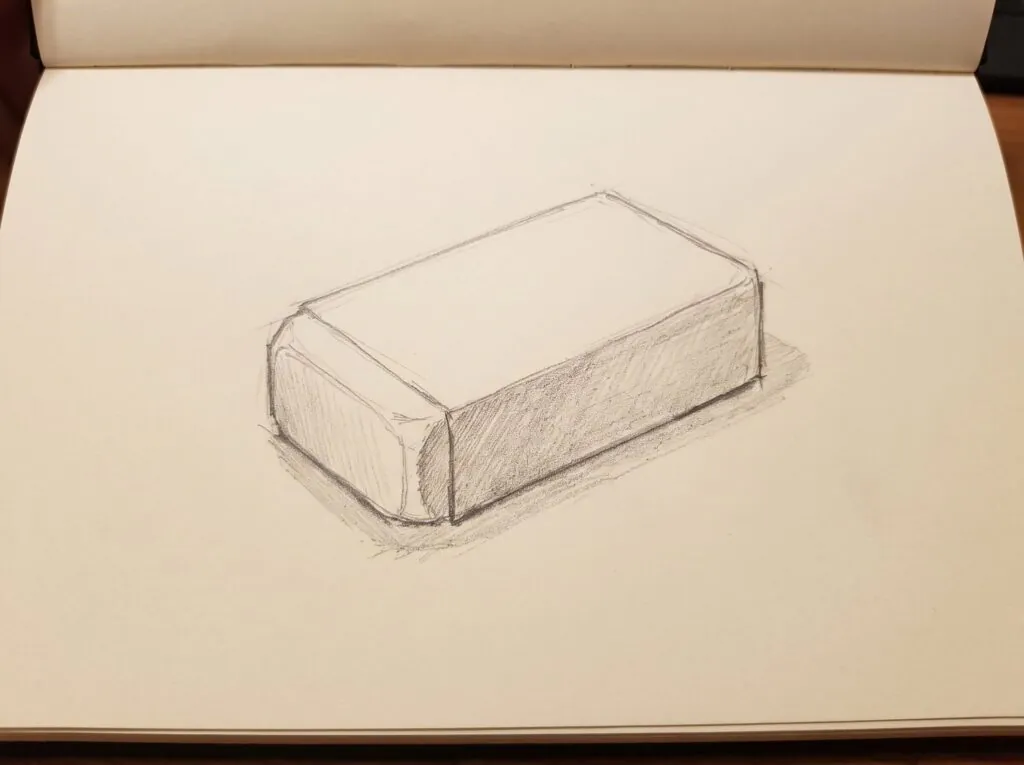
8. A Rectangular Eraser at an Angle
Draw the front rectangle, then extend three short diagonal lines in the same direction to establish thickness. Connect their ends, and darken the underside. Keep the top face mostly white so the geometry remains easy to see.
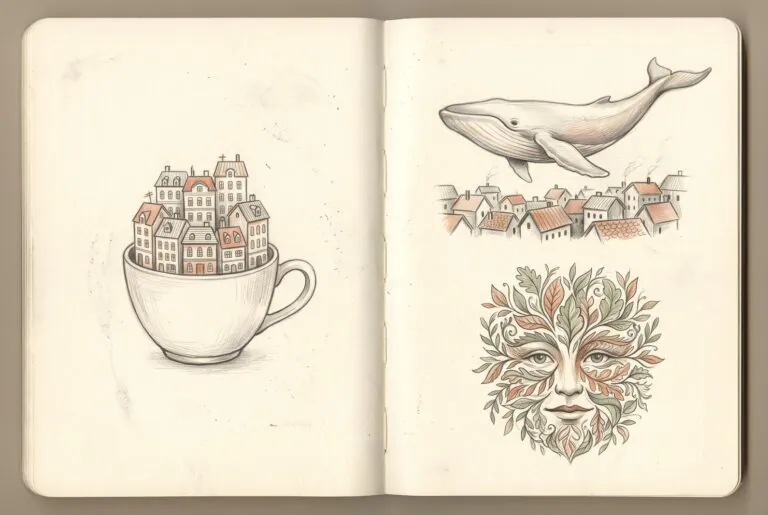
If you prefer sketches arranged for a decorative page, aesthetic drawing ideas explore a different approach to composition and visual style.
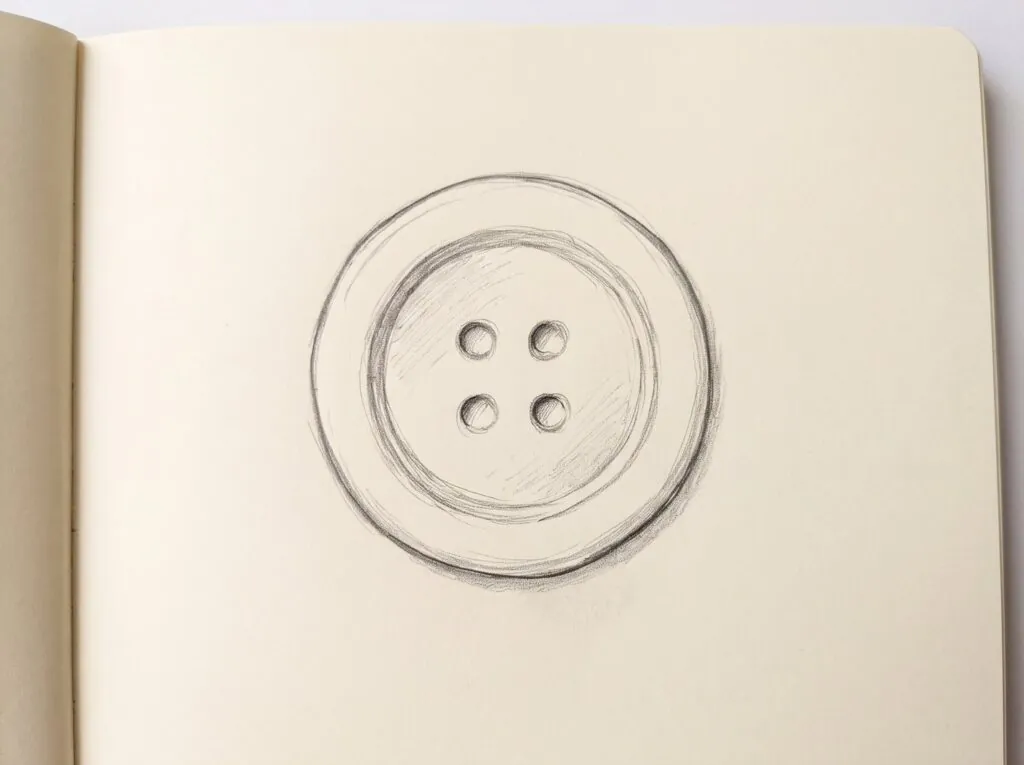
9. A Button with Four Holes
Draw an outer circle, a slightly smaller inner ring, and four tiny holes arranged like a square. Check the distance between the holes before darkening them. A small shadow on one side makes the button look raised off the paper.
10. A Banana Viewed from the Side
Lay down one long shallow curve, then follow it with a second curve that meets at the ends. Add a short stem and one narrow ridge along the peel. Gently darken the underside to clarify its curve.

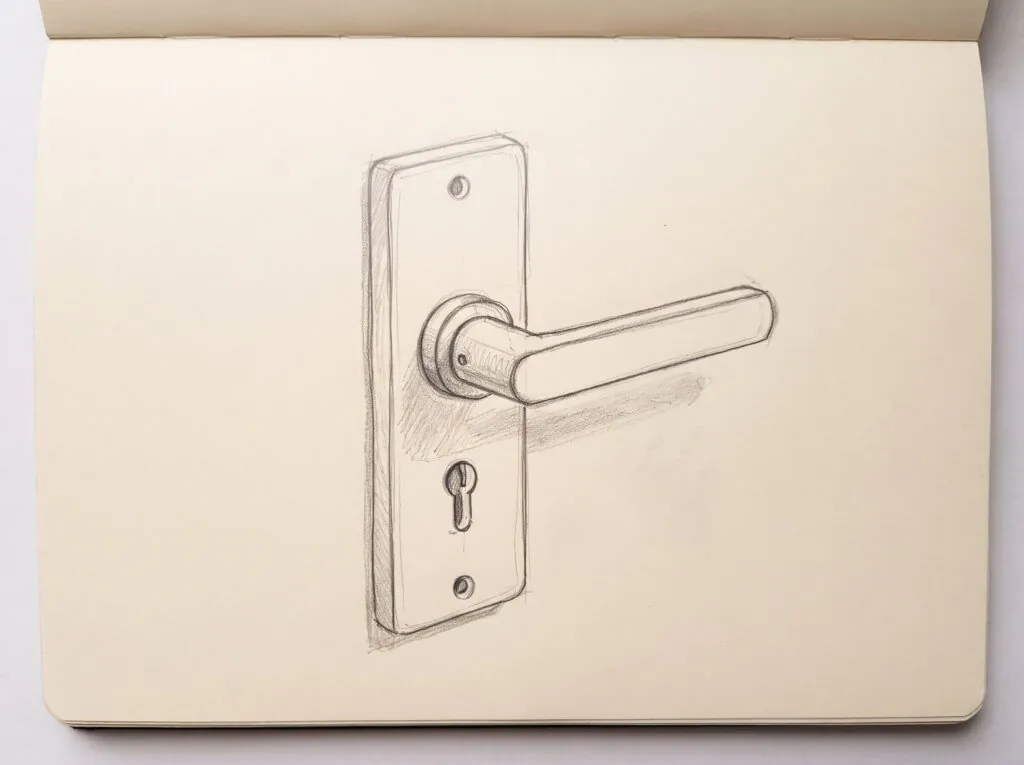
11. A Door Handle and Its Backplate
Begin with a narrow vertical backplate, then place a short lever extending sideways from its center. Use a simple rounded rectangle for the lever and a small oval at its base. Check that both pieces connect cleanly.
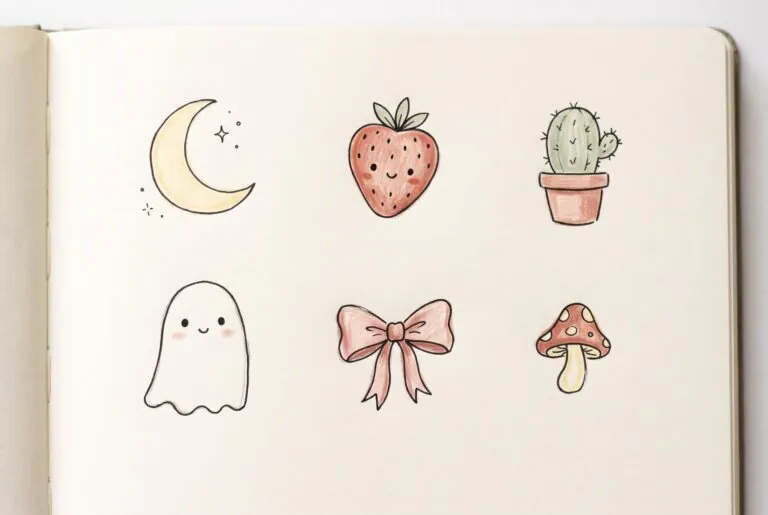
For playful marks rather than observation practice, easy doodles to draw focus on quick, characterful notebook motifs.
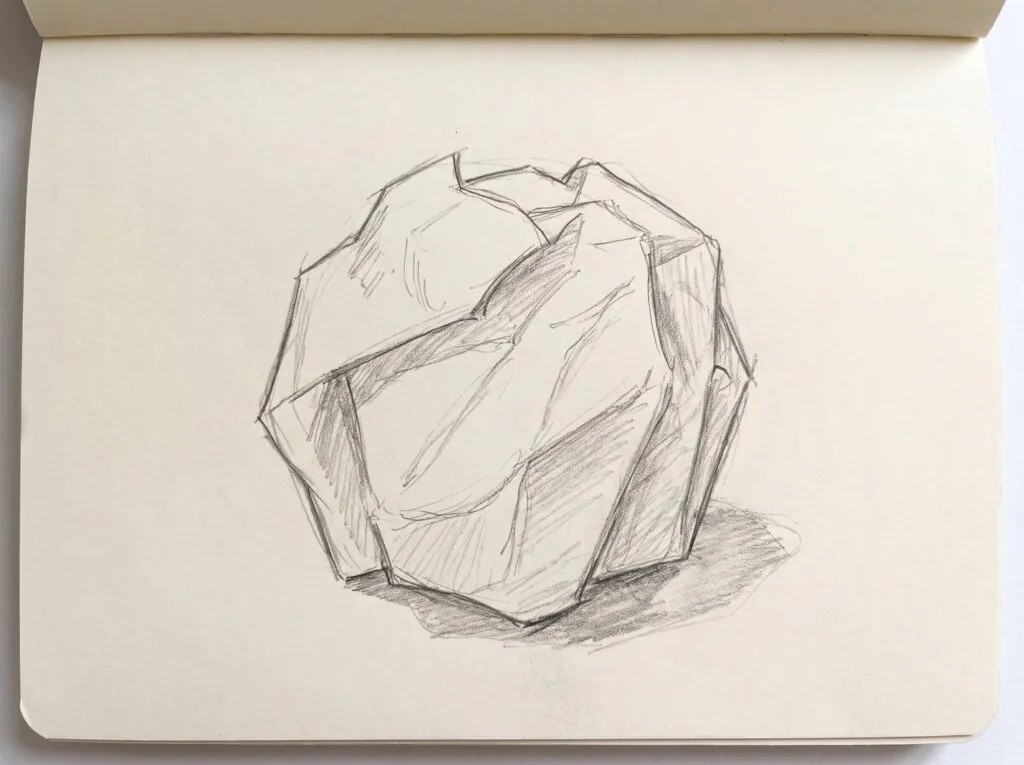
12. A Crumpled Paper Ball
Draw an uneven circular outline using short connected edges. Add just three or four interior crease lines. Shade the deepest folds and leave the raised paper surfaces blank; restraint keeps the drawing beginner-friendly.
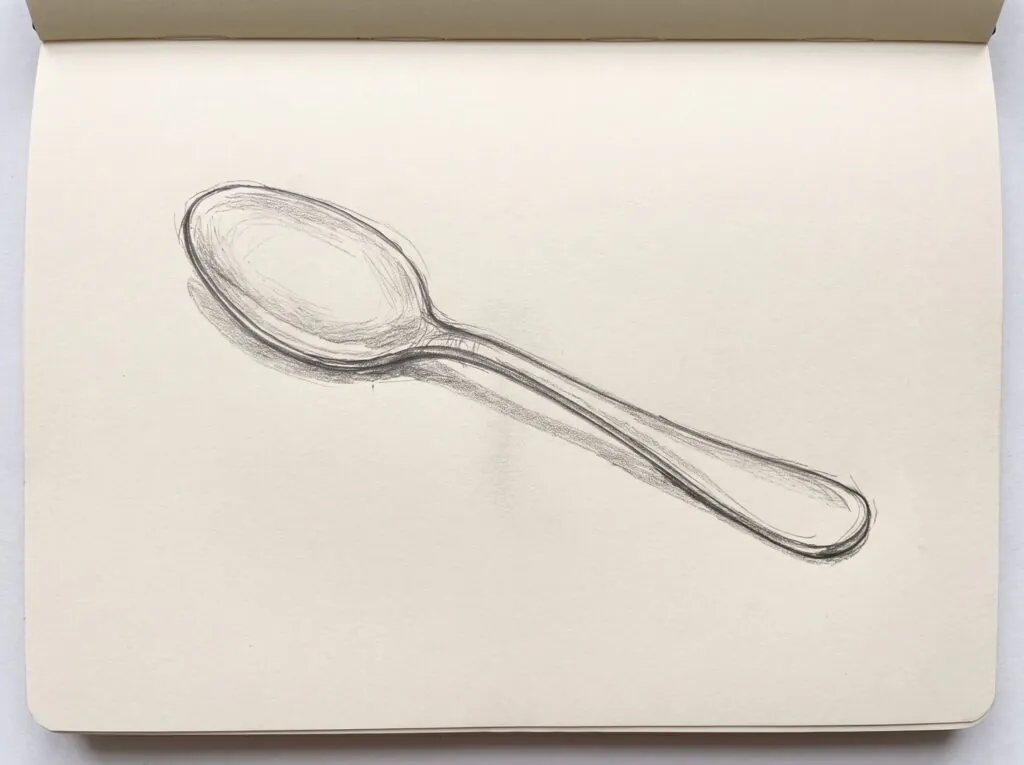
13. A Spoon Resting Diagonally
Outline a long narrow handle ending in an oval bowl. Add a smaller contour inside the bowl and use subtle shading along one edge to show its hollow shape. Avoid reflective metal highlights that would require advanced rendering.
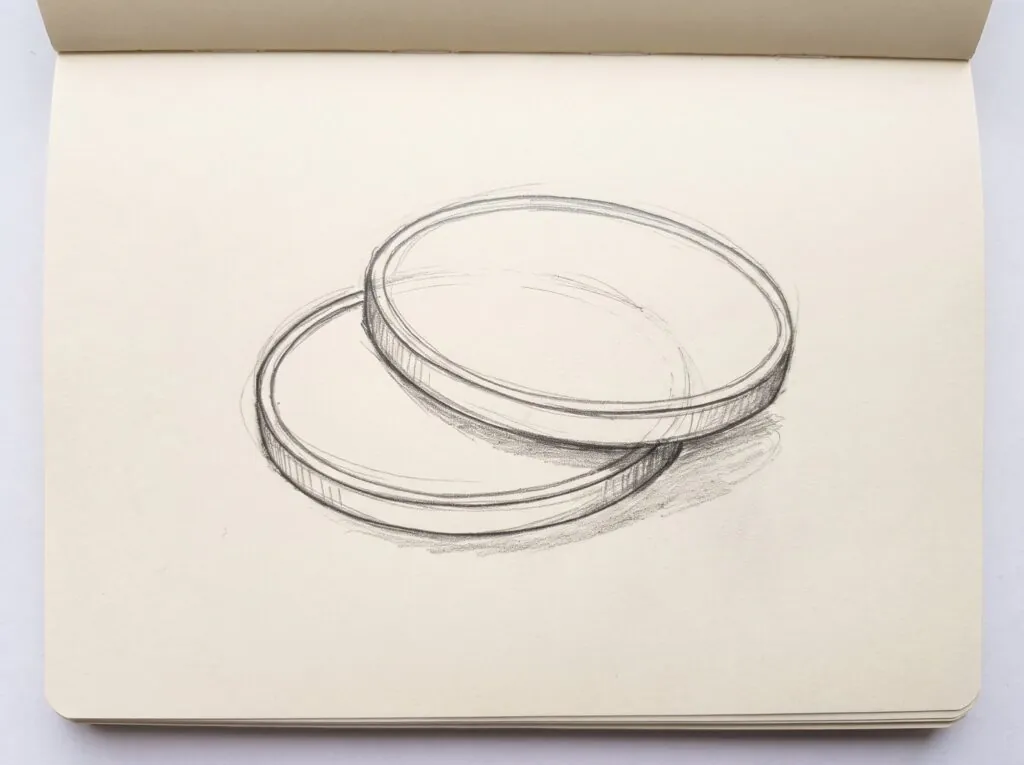
14. Two Stacked Coins
Draw a flattened oval for the upper coin. Add two short vertical sides and a lower curve to show thickness, then repeat a second oval peeking out underneath. Use one dark line where the coins meet.
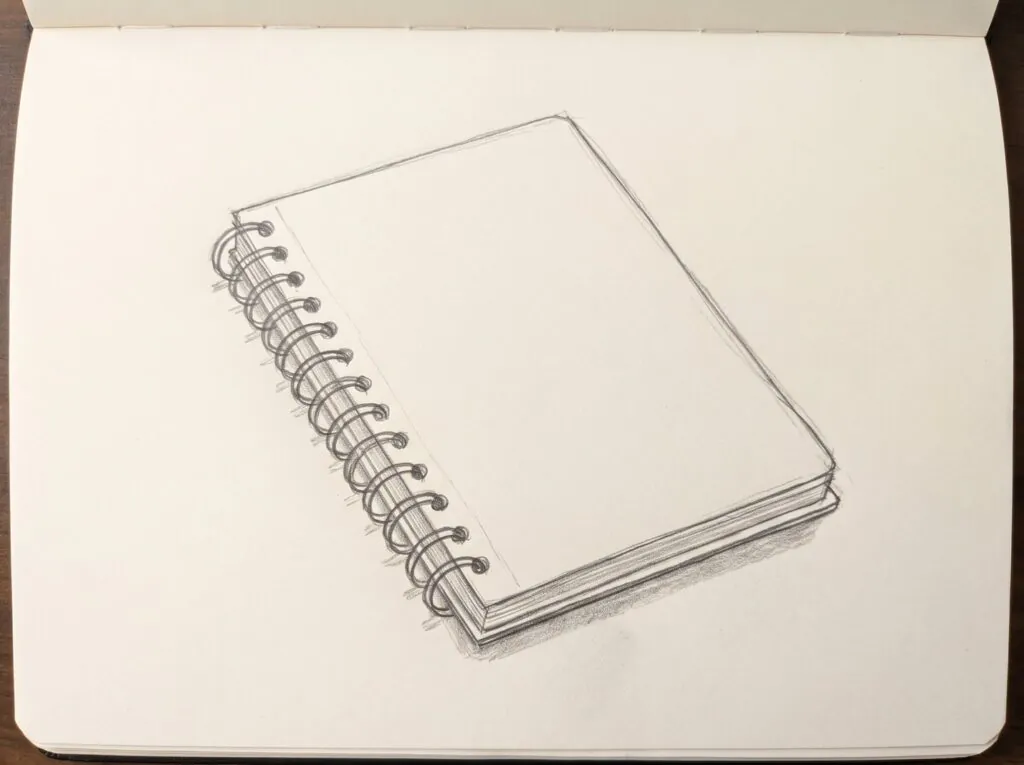
15. A Spiral Notebook Seen from Above
Draw a slightly tilted rectangle and a second line for the cover edge. Along one side, place six or seven spaced C-shaped loops. Make the loops consistent but not mechanical and leave the cover blank.
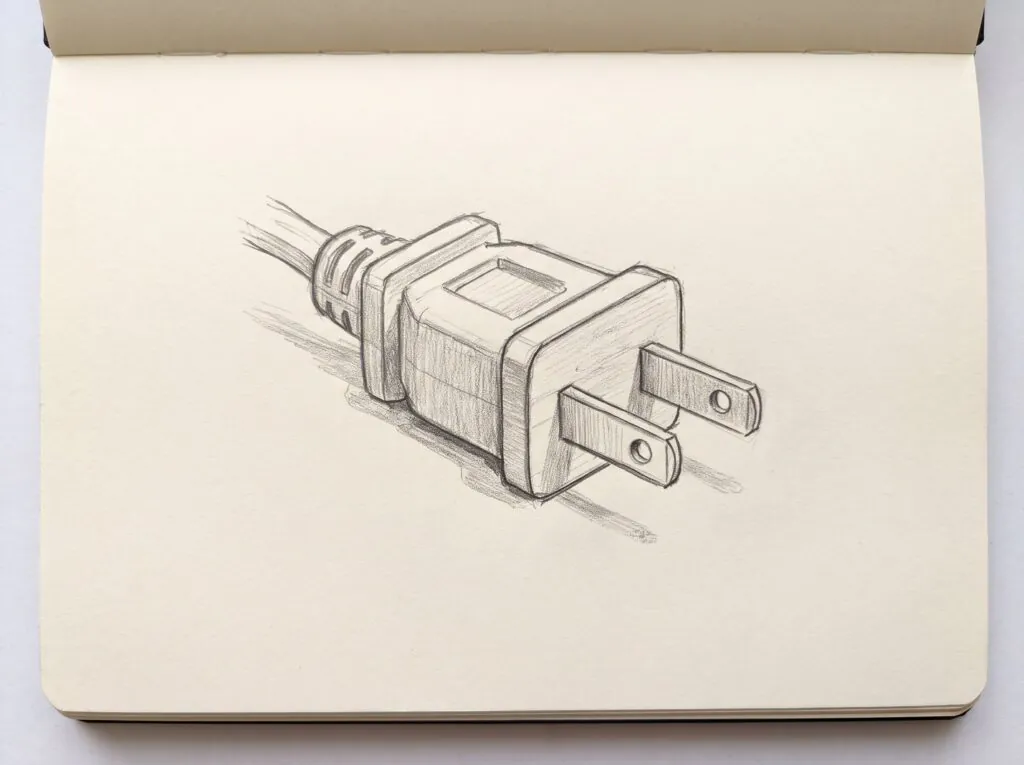
16. An Unplugged Charger Plug
Build the plug from a small blocky rectangular body and two simple metal prongs. Angle the visible side face slightly to suggest depth. Keep the contours straight and darken only the narrow shadow beneath the prongs.
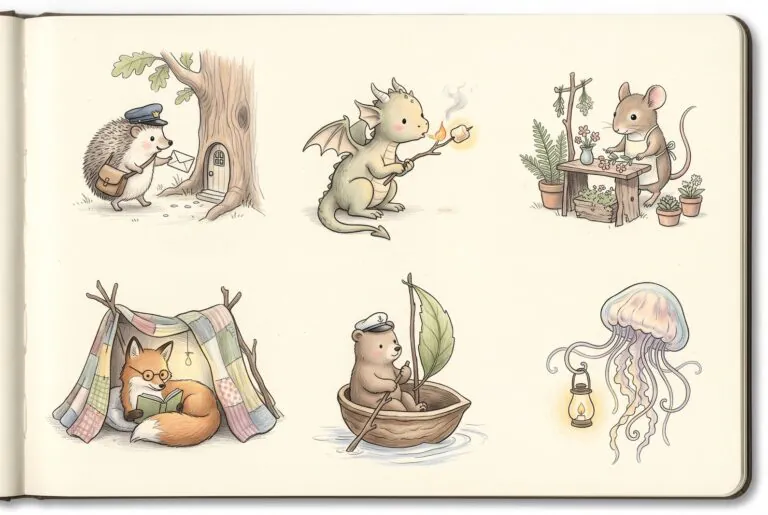
If you would rather try imaginative subjects, cute drawing ideas shift the focus toward personality and storytelling.
17. A Shoelace Tied in a Loose Knot
Begin with a small central knot and draw two unequal loops extending from it. Add two hanging lace ends, erasing lines where one lace passes behind another. A little shadow beneath the knot is enough to explain the layers.

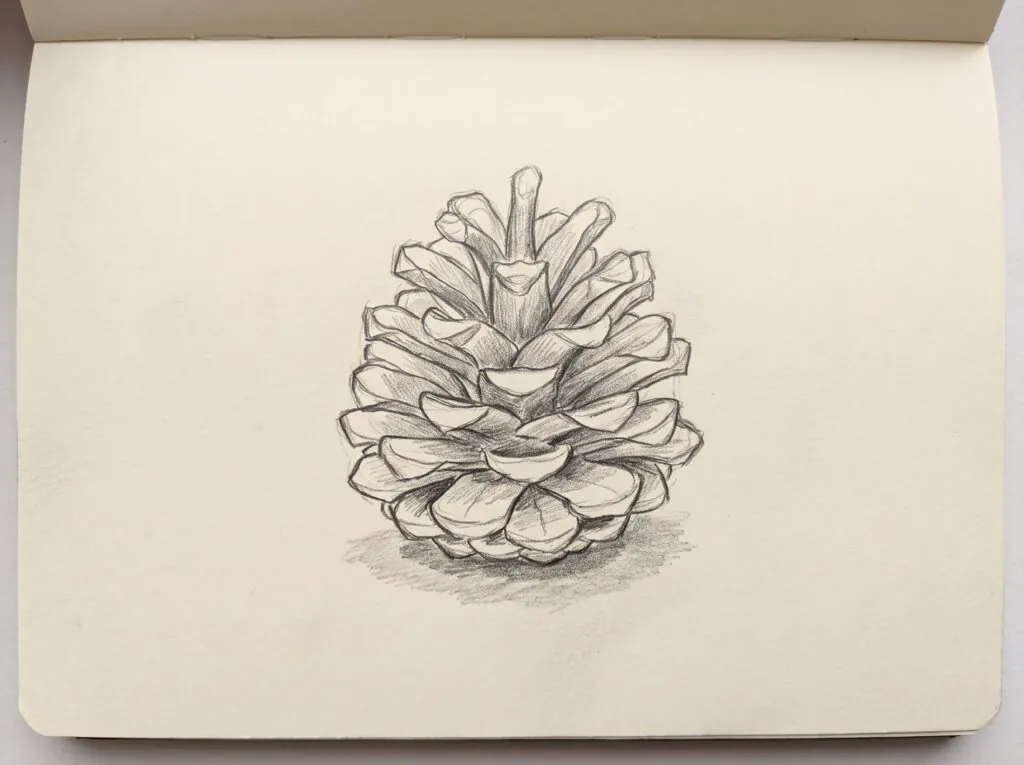
18. A Pinecone with Simple Scales
Sketch an egg-shaped outline and a short stem. Add three staggered rows of broad U-shaped scales rather than dozens of details. Darken the gaps between the scales to create a believable texture quickly.
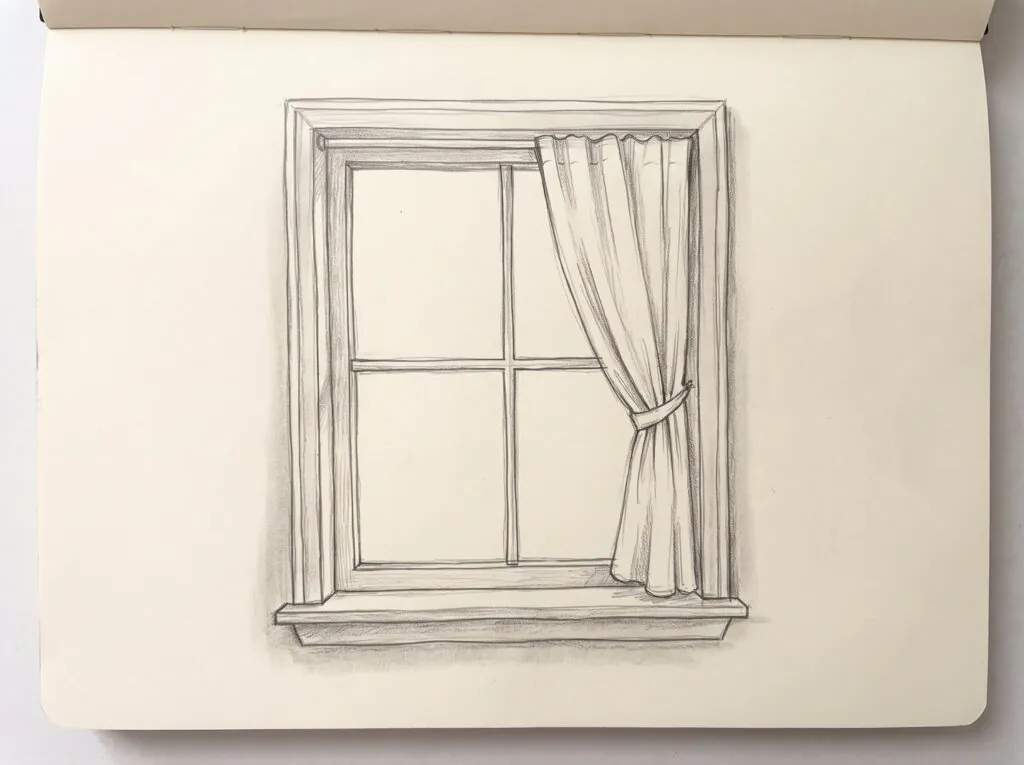
19. A Window with One Curtain Pulled Aside
Start with a tall rectangle and two crossing muntins to create four panes. Draw a short curtain hanging to one side as two gentle vertical folds. Darken the window frame slightly and keep the outside view blank.
When you want to move beyond observational objects, creative drawing ideas offer more experimental sketchbook prompts.
20. A Glass Jar with a Screw-Top Lid
Draw two matching sides, a curved base, and an elliptical lid. A second short horizontal line shows the screw-top thickness. Keep the glass unshaded except for two faint vertical highlights and a thin shadow along the base.

How to Choose an Easy Drawing Idea
For a five-minute warm-up, try the button, pebble, or key. For proportion, choose scissors, a clothespin, or the door handle. To practice a little depth, sketch the eraser, stacked coins, or glass jar. Textures are easiest to explore with the towel, paper ball, and pinecone. You can repeat one object from another angle to see how the outlines change; that simple exercise often teaches more than adding extra decorations.
Final Thoughts on Simple Drawing Ideas
A useful sketchbook is not a collection of perfect finished drawings. It is a place to look more closely at familiar things. Start with one uncomplicated object, block in its largest shapes, and pay attention to a single detail—an overlapping line, a shadow, or a change in width. These simple drawing ideas are meant to make the first pencil mark feel manageable, not to demand an impressive result.