
20 Creative Drawing Ideas to Get Out of an Art Rut
When the blank page starts looking a little too blank, drawing something strange can help. These 20 creative drawing ideas turn everyday objects, animals, and landscapes into unexpected scenes—without requiring elaborate supplies or advanced skills. Pick one that intrigues you, sketch the biggest shapes first, and let the smaller details follow.
The best drawing ideas creative sketchbooks can hold are not always the most complicated ones. Sometimes a simple teacup becomes a city, or a window opens onto the ocean. Use graphite, a fineliner, or a few colored pencils; most of these concepts can begin with ordinary lines and shapes. If a surreal scene feels like too much today, start with a few easy doodles to draw, then return to these more imaginative compositions.
20 Imaginative Sketchbook Prompts to Try
These unique drawing ideas are designed to give you a subject and a starting move, not a strict formula. Change the scale, simplify a background, or swap materials to make an idea your own.
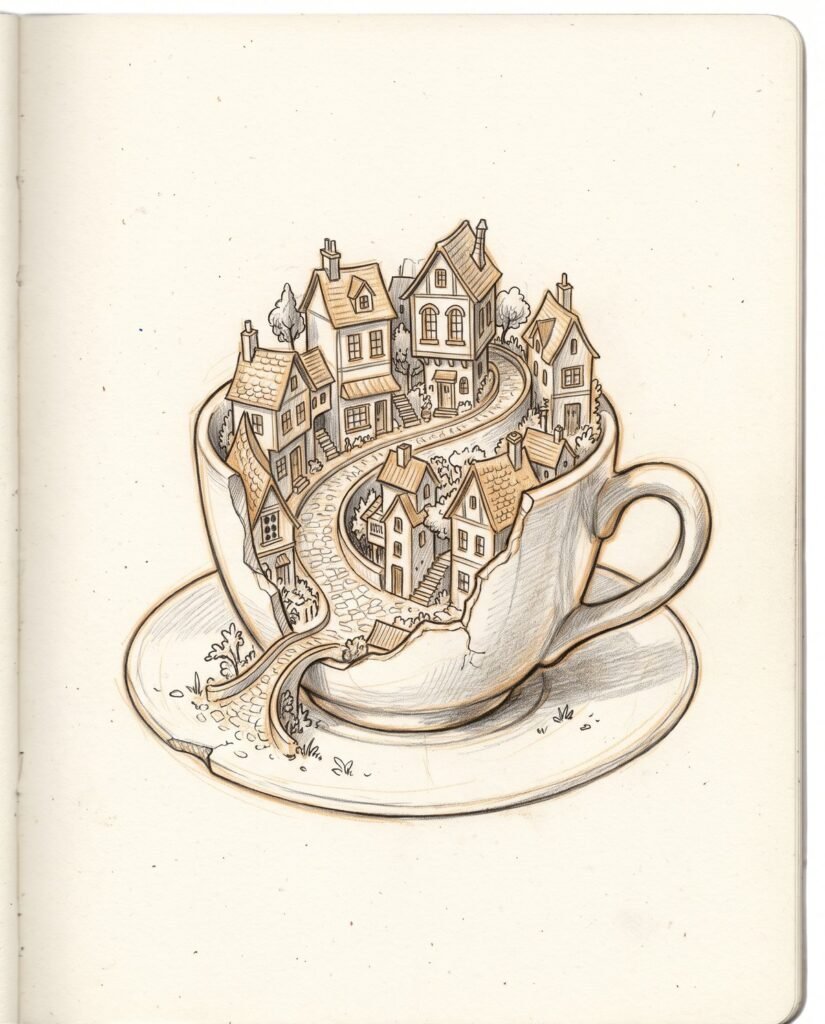
1. A Tiny City Inside a Teacup
Begin with the rim ellipse, then stack narrow building silhouettes inside it. Let one rooftop extend just above the cup, and use a few small lit windows to establish scale. The pleasure here is the contrast between a familiar household object and a whole imagined place. Shade the cup more softly than the buildings so the miniature architecture remains the focus.
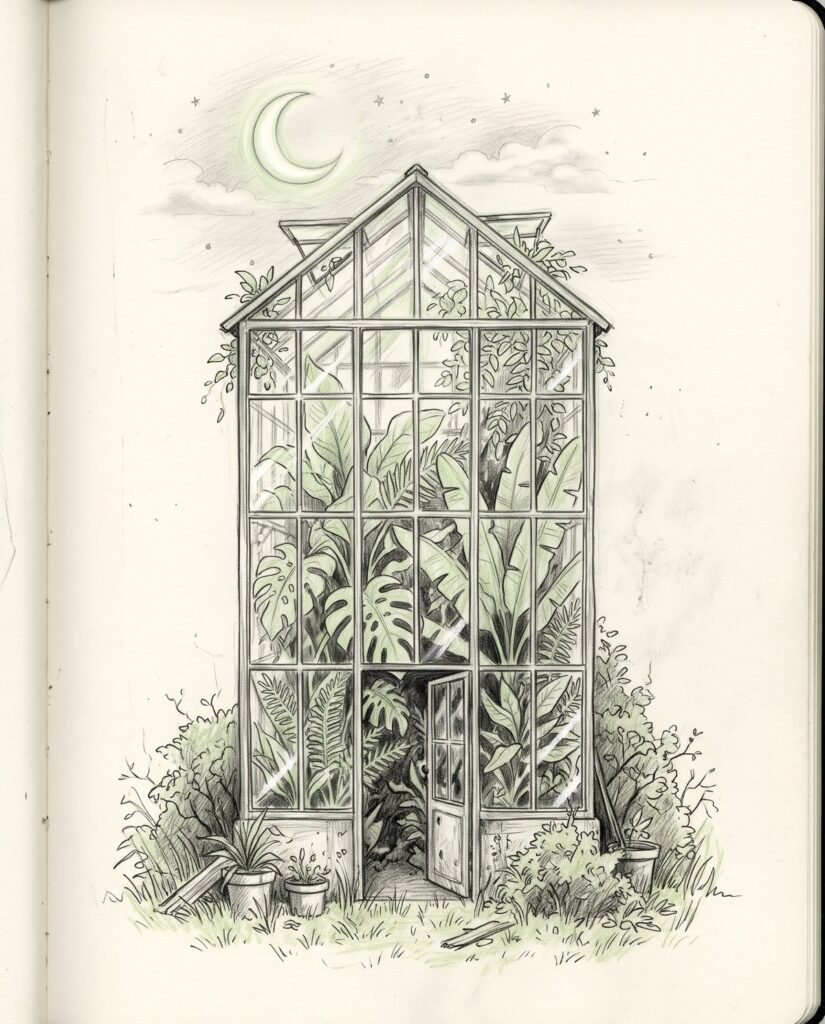
2. A Moonlit Greenhouse
Draw the greenhouse as a simple peaked rectangle before dividing the glass into panes. Fill the interior with layered leaf silhouettes, leaving small gaps for moonlight to show through. A single dark foreground plant can make the scene feel deep without requiring complicated perspective. Keep the brightest patches of paper untouched for the glass reflections.
3. A Goldfish Swimming Through the Clouds
Block in the fish with two almond-like curves and a fan tail, then place clouds at different heights around it. A few loose bubble shapes can hint at the watery impossibility. Keep the fish’s fins translucent with light orange layers. The idea works because an ordinary animal appears in a setting that should not belong to it.

4. A Library Growing Out of a Tree
Sketch a twisting trunk and three sturdy branches first; add tiny shelf openings and books following the trunk’s curve. Let roots wrap around a small reading step. Use short broken hatching strokes for bark, keeping book spines simpler so the image reads quickly. The scene has plenty of room for invented details, from a ladder to a miniature lamp.

5. A Doorway Into a Different Season
Place a tall doorframe near the center and draw one clear winter path receding beyond it. On the near side, add a leafy potted plant or sunlit floorboard. Use a cooler blue-gray pencil beyond the threshold and warmer marks inside. The shift in temperature tells the story more effectively than filling every inch with detail.

6. A Constellation Made of Everyday Objects
Choose four or five recognizable objects and sketch them small, leaving generous space between them. Connect only a few corners with thin dotted lines, then add star points of varying sizes. This is a fun composition challenge: the objects should feel connected without becoming a crowded pattern. Keep one object larger as the visual anchor.

When you run out of subjects to sketch, drawing ideas for when you don’t know what to draw can help you find a starting point before experimenting with more unusual combinations.
7. A Floating Staircase of Books
Start with one rectangular book in the foreground and repeat smaller, higher books toward a single vanishing area. Angle each spine consistently so the steps feel stable, even though they float. A tiny paper airplane provides scale. Use the darkest shadows directly beneath each book and leave the background mostly white for a dramatic, airy result.

8. A Botanical Portrait With Hidden Features
Lightly draw an oval and mark the eye, nose and mouth positions before replacing several facial contours with stems and leaves. One fern could form an eyebrow while petals curve around a cheek. Aim for an expressive silhouette, not perfect realism. Repeating two or three leaf shapes helps the portrait look intentional rather than randomly decorated.

9. A Rainstorm Inside a Glass Jar
Draw the glass jar’s rim and sides, then sketch a miniature cloud at the top and a little umbrella at the bottom. Make the falling droplets different lengths to suggest movement. Save highlights along the glass edges and lightly shade the tabletop beneath. Keeping the weather confined to one object turns a simple still life into a visual joke.

10. A House Carried by Giant Flowers
Build the cottage from a cube and triangular roof, then put oversized daisy heads beneath it like supports. Lean one stem slightly to make the scene playful. Vary the petal lengths and add a few small leaves. Keep the cottage’s windows simple; the inventive structure matters more than architectural accuracy.

11. A Fox Made of Autumn Leaves
Sketch a resting fox as one rounded shape, identifying the pointed ears and sweeping tail. Replace sections of the tail with oak- and maple-inspired leaf silhouettes. Use overlapping warm tones to separate the leaves from the fox’s face. This is a manageable way to practice shape transitions and texture without drawing every hair.

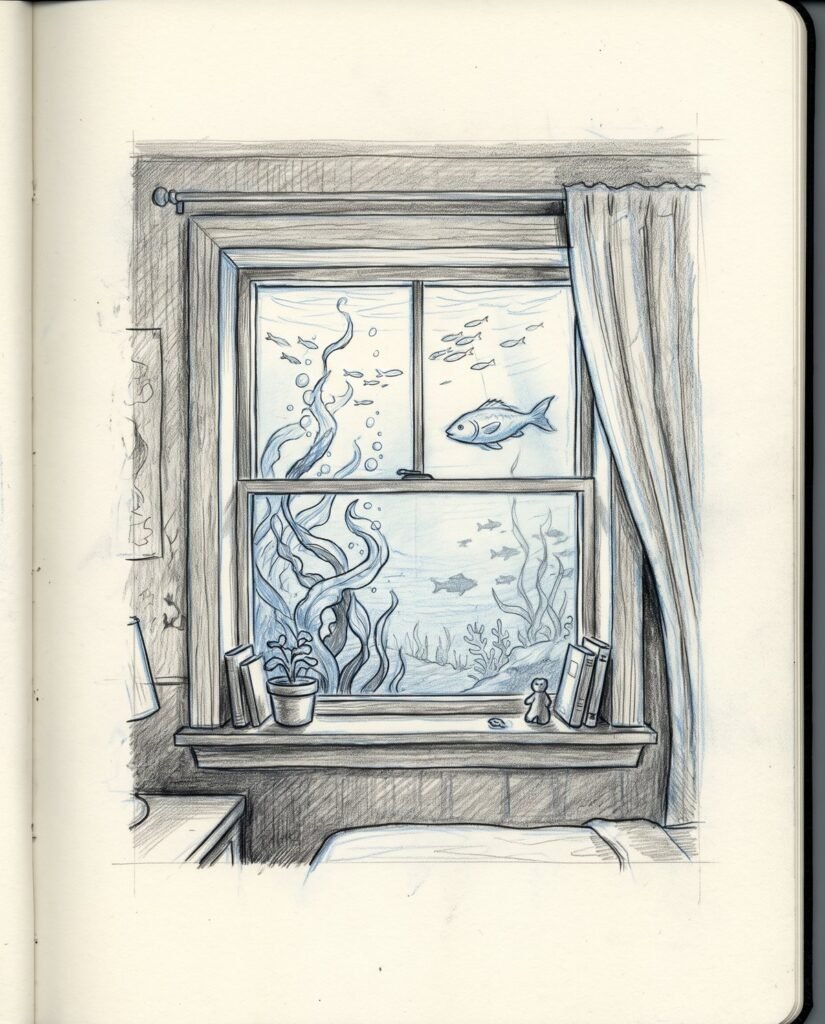
12. A Window Looking Into the Ocean
Draw a simple window frame and sill, then place one large fish and several small fish outside. Use gently curving seaweed stems to suggest underwater motion. A curtain in the foreground adds a recognizable domestic clue. Keep the room almost monochrome and the ocean lightly blue to strengthen the unusual contrast.
13. A Paper Airplane Carrying a Garden
Construct the airplane from a few crisp triangular folds, then draw miniature plants growing along the central crease. Use delicate dots for seeds and mushroom caps. A slight tilt gives the plane motion; a short dotted flight path is enough. The pairing of hard folded edges with organic stems makes this small drawing particularly satisfying.

14. A Mountain Landscape in a Matchbox
Begin with the outer rectangular matchbox and its sliding tray. Inside the tray, stack mountain ridges from dark foreground to faint distance; thread a narrow river through them. Carefully align the miniature landscape with the box opening so it feels contained. Atmospheric shading, rather than lots of detail, creates the illusion of a world much larger than the box.

If you would rather work with delicate motifs and decorative details, aesthetic drawing ideas offer another way to explore your sketchbook without building a whole imaginary scene.
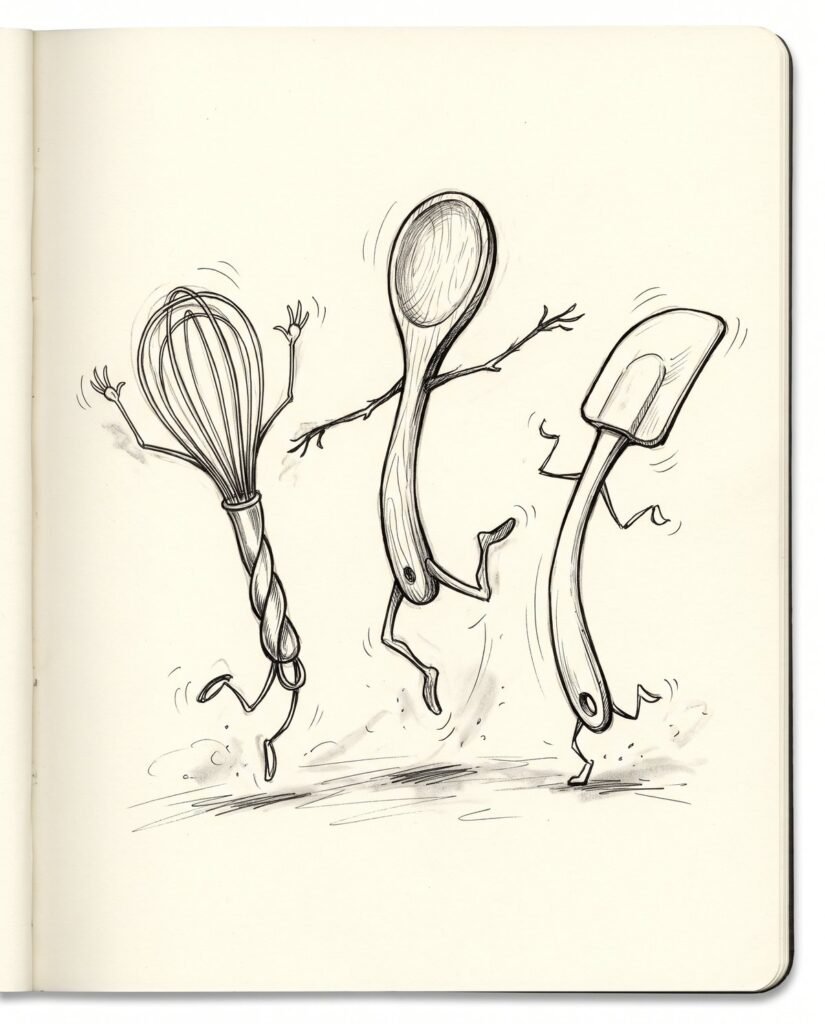
15. A Dancing Collection of Kitchen Utensils
Draw each utensil as a clean silhouette, then tilt their handles at different angles to suggest movement. Add a few curved motion lines around them instead of drawing faces on every object. Contrast the whisk’s wire loops with the broad paddle shapes. This one is good for practicing rhythm and gesture while keeping the subjects familiar and easy to simplify.
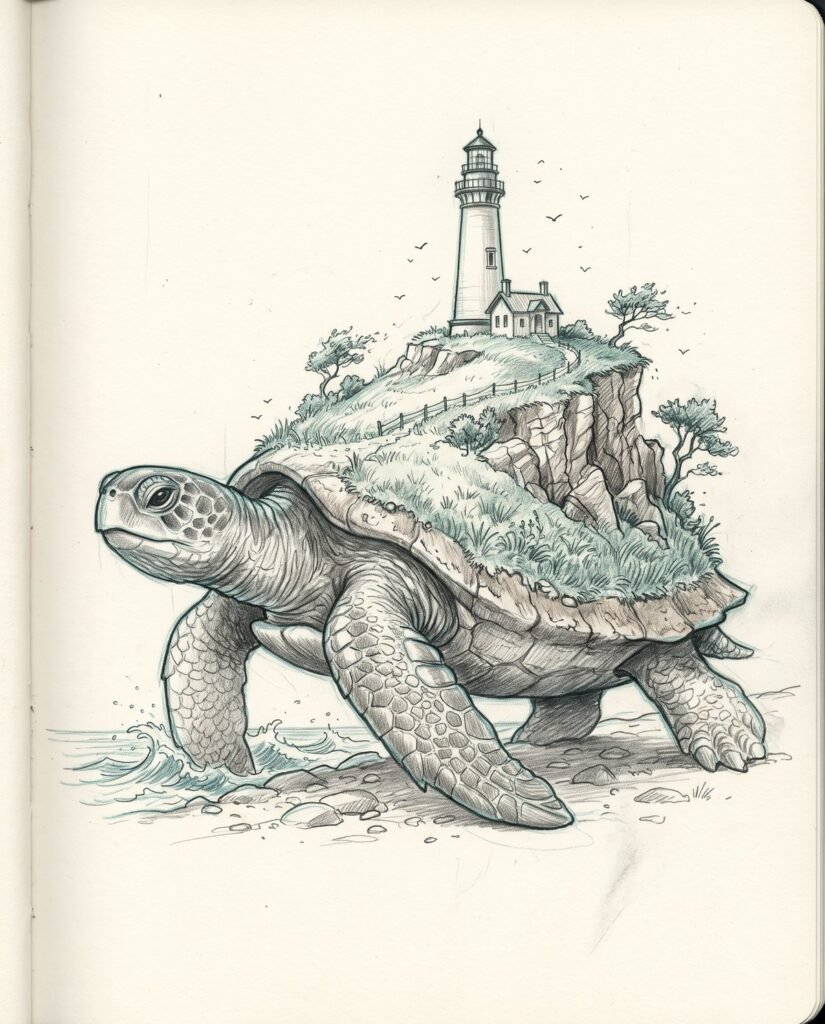
16. A Lighthouse on the Back of a Turtle
Outline the turtle with a broad oval shell, head and four short legs. Set a small tapered lighthouse near the top, then fill the shell edge with grasses. To avoid a cramped composition, let the turtle occupy the lower two-thirds of the page. The repeating curved shell plates make a useful texture study beneath the tall, geometric lighthouse.
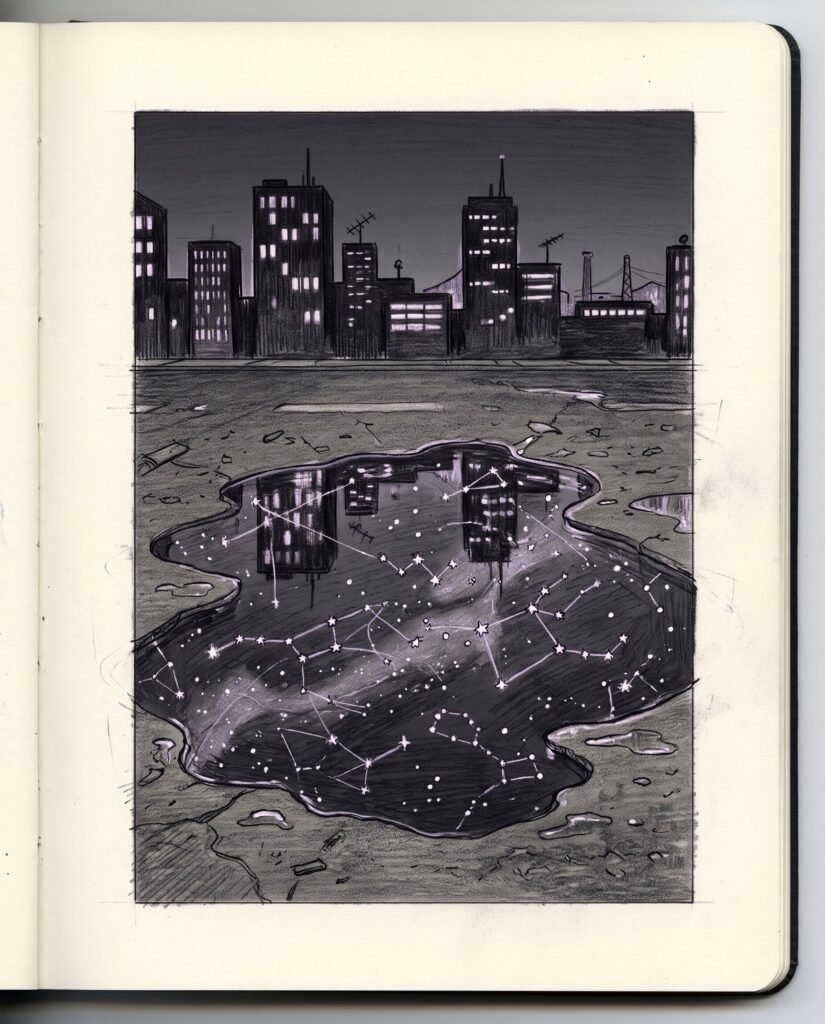
17. A Skyline Reflected in a Puddle of Stars
Draw a row of blocky building shapes across the upper page and a loose oval puddle below. Reverse just a few building silhouettes in the water; between them place tiny stars that are absent from the sky. Wavering horizontal strokes help the reflection feel fluid. The unexpected detail is easier to notice when the surrounding pavement stays understated.
18. A Clock Turning Into Wildflowers
Draw a light circle, a pair of clock hands and only a handful of number markers. Transform three markers into tall wildflower stems, allowing petals to overlap the edge. Keep the mechanical center crisp while the plants become looser. This contrast between measured time and unruly growth is the point of the image, so avoid overloading the clock face.

19. A Whale Drifting Above a Neighborhood
Start with the whale’s long curved silhouette, then add two or three small houses underneath to communicate its enormous scale. A pale shadow beneath the whale makes it feel suspended. Use very light layered shading along its belly, saving deep tones for a few roofs. Because the shapes are uncomplicated, this concept works even as a short sketch.

20. A Sketchbook Page That Escapes Its Borders
Draw a visible sketchbook rectangle first, complete with a central crease. Inside, place a winding river, hills and one tiny bridge; extend the river beyond the page edge as if it becomes real. Keep the outside world sparse so the boundary-breaking element is obvious. Careful overlap at the paper edge sells the illusion better than complicated shading.

[IMAGE: creative-drawing-20-a-sketchbook-page-that-escapes-its-borders.webp]
How to Make These Creative Drawing Ideas Your Own
Try combining two prompts, changing the viewpoint, or using a single accent color. Limiting yourself to five minutes of loose thumbnails can make choosing a composition easier. If the first attempt feels stiff, redraw only the main silhouette rather than starting every detail again. For a longer session, choose one concept and make three variations: a close-up, a wide view, and an unexpected angle.
You do not need expensive supplies to explore different drawing ideas. A regular pencil can establish volume, a black pen can sharpen focal edges, and a little colored pencil can pull attention toward a single object. Leave white space where it helps the image read, especially if you plan to share your sketchbook online.
Final Thoughts on Drawing Ideas Creative Enough to Break an Art Rut
An art rut is a good excuse to change the rules of your usual sketching routine. Pick the pairing that sounds least familiar, draw its largest shapes, and see what the page suggests next. The goal is not twenty perfect pieces; it is one interesting mark that leads to another.