
20 Drawing Ideas for When You Don’t Know What to Draw
Some days, choosing a subject is harder than drawing it. These 20 drawing ideas mix observational sketches, everyday subjects, and imaginative prompts for your sketchbook.
You do not need fancy supplies or a perfectly planned composition. Start with an HB pencil or fine-liner, an eraser if you like one, and a page you are happy to experiment on. Choose the idea that catches your attention—not necessarily the most impressive-looking one—and give yourself ten minutes to make a start.
1. A Coffee Mug With a Curved Handle
A familiar ceramic mug becomes a useful little study in ellipses, curved lines, and soft shadows. Set one on a table where you can see the rim and the handle together. Lightly block in the overall height and width, then draw the rim as a flattened oval—not a straight line. Follow the silhouette of the handle before adding its interior opening. A small patch of shading beneath the mug grounds it without making the sketch complicated. Try keeping the outline loose and letting a few construction marks show.

2. Three Mushrooms in Different Shapes
A mushroom trio is more interesting when the caps do not all match. Pair a rounded button mushroom with a tall, narrow stem and a slightly tilted umbrella-shaped cap. Begin with the largest cap shapes, attach the stems, and add a few short gill marks underneath only where visible. Keep the spacing uneven so the group feels naturally arranged. Fine pen hatching beneath each cap can give the shapes dimension while leaving the rest of the page open.

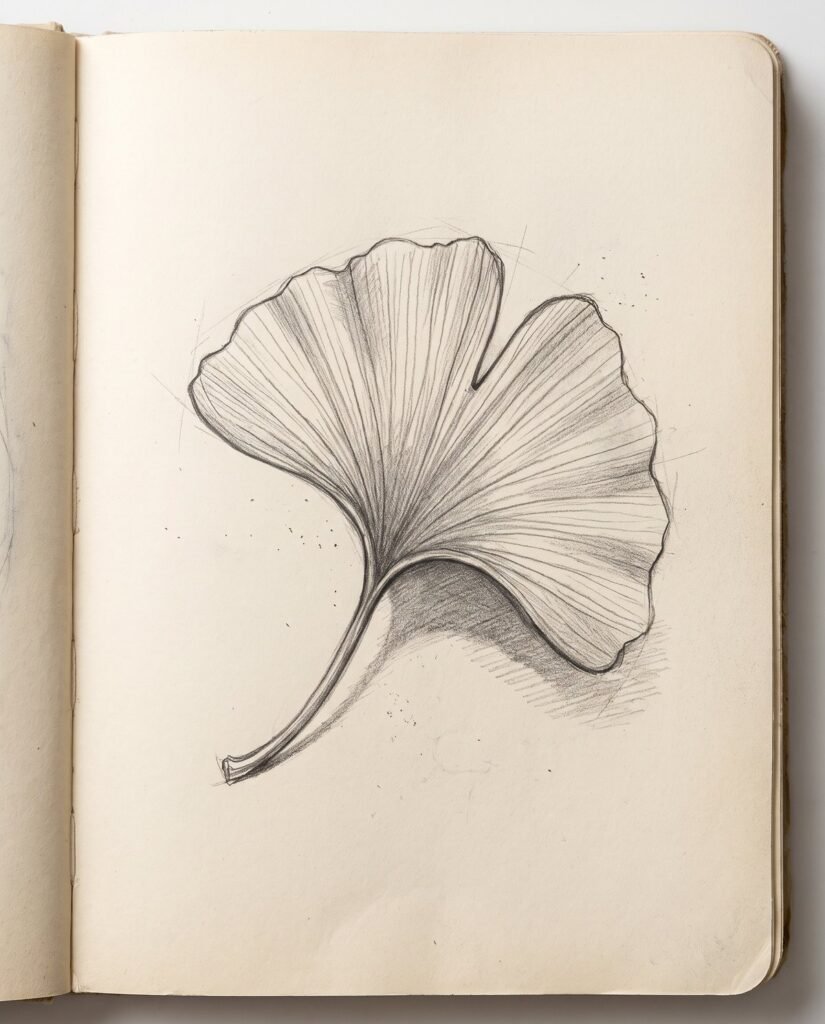
3. A Leaf With Beautiful Veins
Pick up a leaf or look at one closely instead of inventing every detail from memory. Draw its overall silhouette first, then place the central vein and smaller veins branching toward the edges. Notice whether the leaf is symmetrical, curled, torn, or slightly uneven; these details make it recognizable. For a quick version, keep only the outline and a few veins. For a longer study, add light pencil shading to show the folds and raised surface.
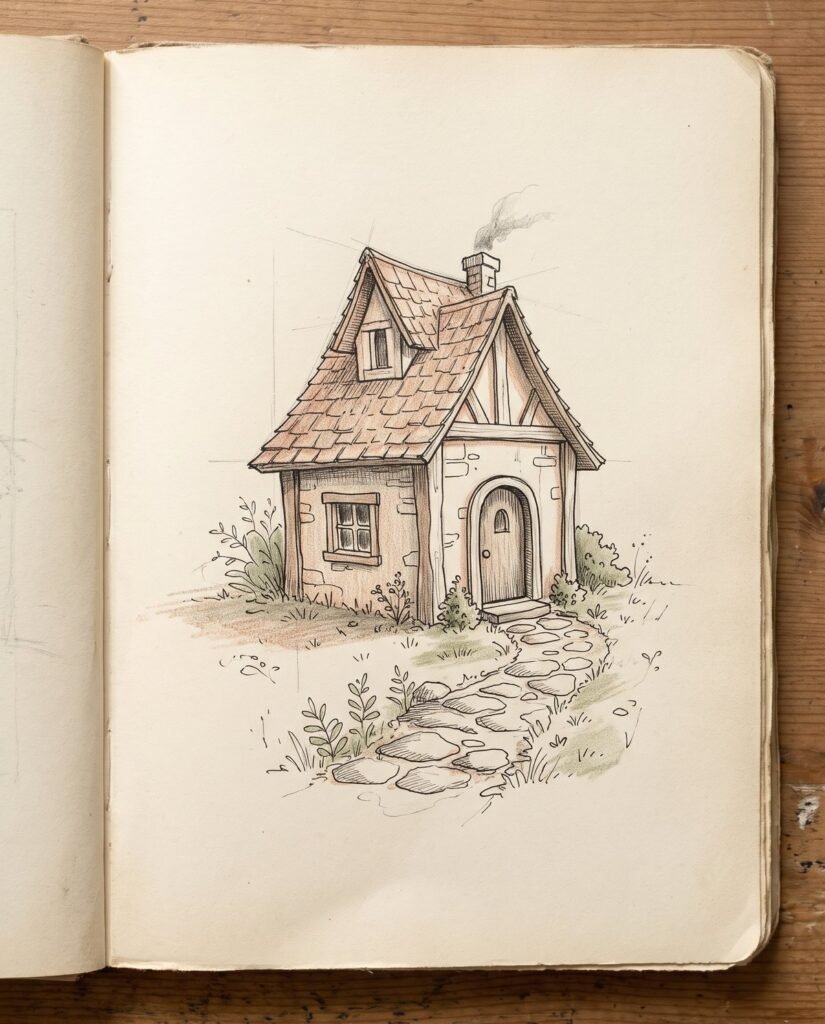
4. A Little House With a Steep Roof
Design a tiny storybook house with a pitched roof, one round window, and a crooked stepping-stone path. Start with a rectangle for the front wall and a triangle for the roof, then choose one charming detail, such as climbing ivy or a little chimney. If you show the side wall, make its roof and wall edges recede consistently toward the same vanishing point rather than tilting them at random. A few hand-drawn roof tiles are plenty; you do not need to fill every surface.
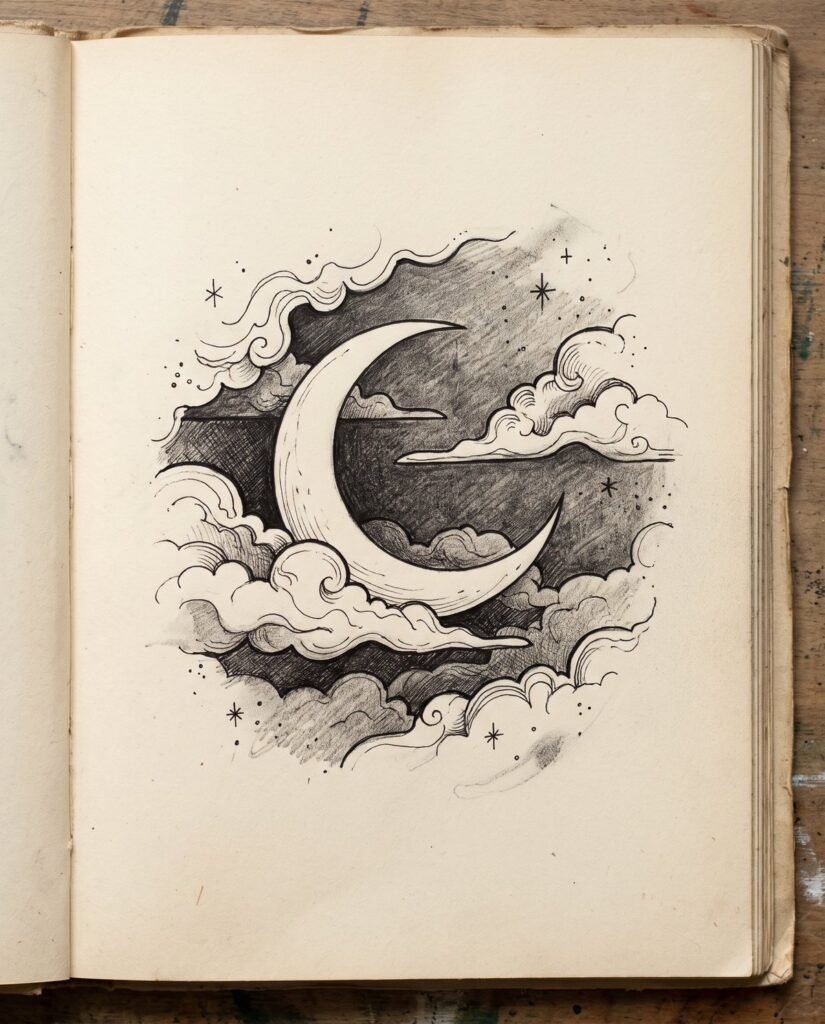
5. A Crescent Moon Between Clouds
This is an easy drawing idea when you want something atmospheric but not labor-intensive. Sketch the outer arc of a crescent, draw the inner curve, then tuck two overlapping cloud shapes around it. Avoid perfectly identical cloud bumps; a few long, low curves look more convincing than a chain of circles. Shade the sky lightly in graphite or leave it blank and add tiny ink stars sparingly. The contrast between clean moon edges and softer clouds does most of the work.
6. A Pair of Worn Sneakers
Shoes have more personality than their outlines first suggest: soft creases, loose laces, thick soles, and a slightly bent tongue. Place one sneaker at an angle and begin with the overall wedge shape, rather than drawing the laces first. Mark the sole as a band wrapping around the shoe, then add only the seams you can actually see. Short, broken pencil lines work nicely for fabric texture. If the second shoe feels too ambitious, sketch just one and let it fill the page.

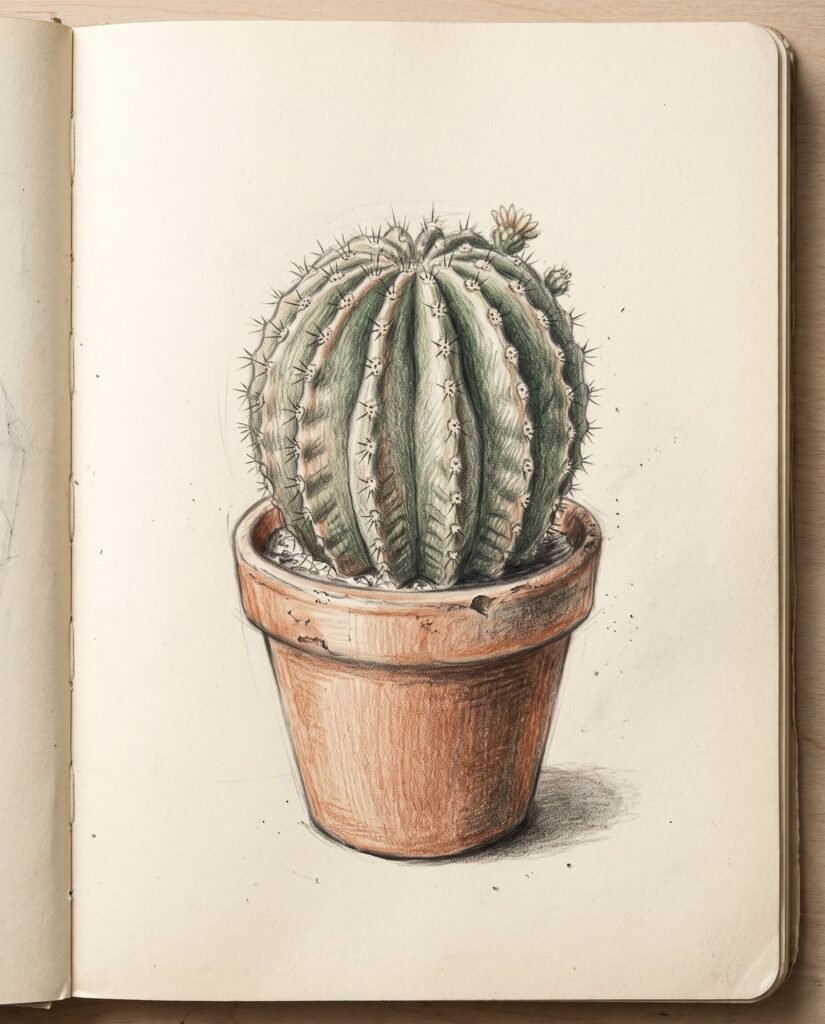
7. A Small Potted Cactus
A squat pot and an upright cactus make a simple arrangement of contrasting shapes. First draw the pot with a curved opening and tapered sides. Then sketch two or three cactus lobes rising from the soil, keeping the silhouette slightly irregular. Instead of marking every spine, suggest them with short, evenly considered strokes along the ribs. Try a muted green colored pencil for the plant and leave the pot in graphite. The restrained palette keeps this one relaxed and graphic.
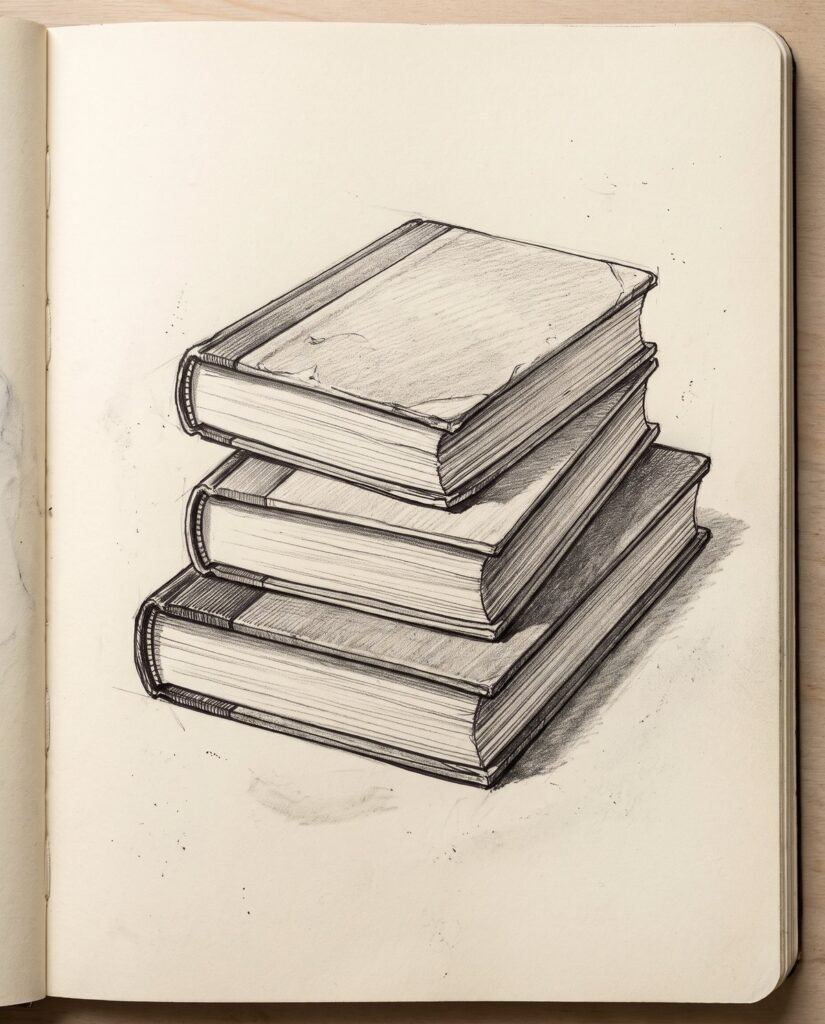
8. A Stack of Favorite Books
Three books stacked unevenly create an appealing sketch without requiring lots of detail. Lay out the large rectangular shapes first; make sure the covers and page blocks share believable angles. A thin shaded strip beneath each cover helps separate one book from the next. Resist inventing tiny illegible titles on the spines—plain spines, decorative bands, or one simple motif look cleaner. For extra character, add a folded bookmark peeking out between the pages.
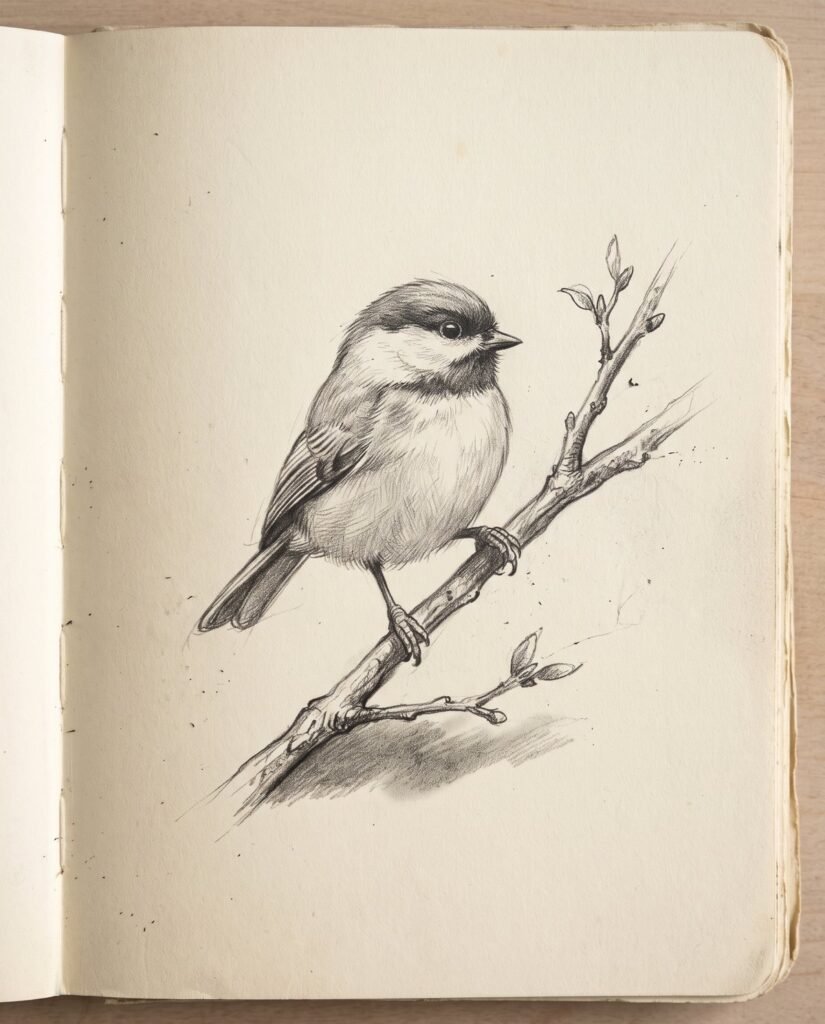
9. A Tiny Bird on a Branch
A perched bird can be built from a round head, an oval body, a tapered tail, and two delicate feet. Draw a light gesture line to establish the bird’s tilt, then refine the silhouette before you add the eye and beak. Keep feather texture near the wing rather than covering the entire body in tiny strokes. A branch with one or two leaves supplies context and a little asymmetry. Use a bird reference if you want accurate leg and wing placement.
10. A Glass Jar Holding One Flower
The contrast of a transparent jar and an expressive flower stem makes this a lovely observation exercise. Start with the jar’s top and bottom ellipses, then join them with gently curved sides. Let the stem show through the glass, using lighter strokes where it overlaps highlights. Draw a single daisy-like flower, with petals of slightly different lengths. You can suggest water with one faint horizontal ellipse; heavy outlines around every glass edge can make the jar feel solid instead of clear.

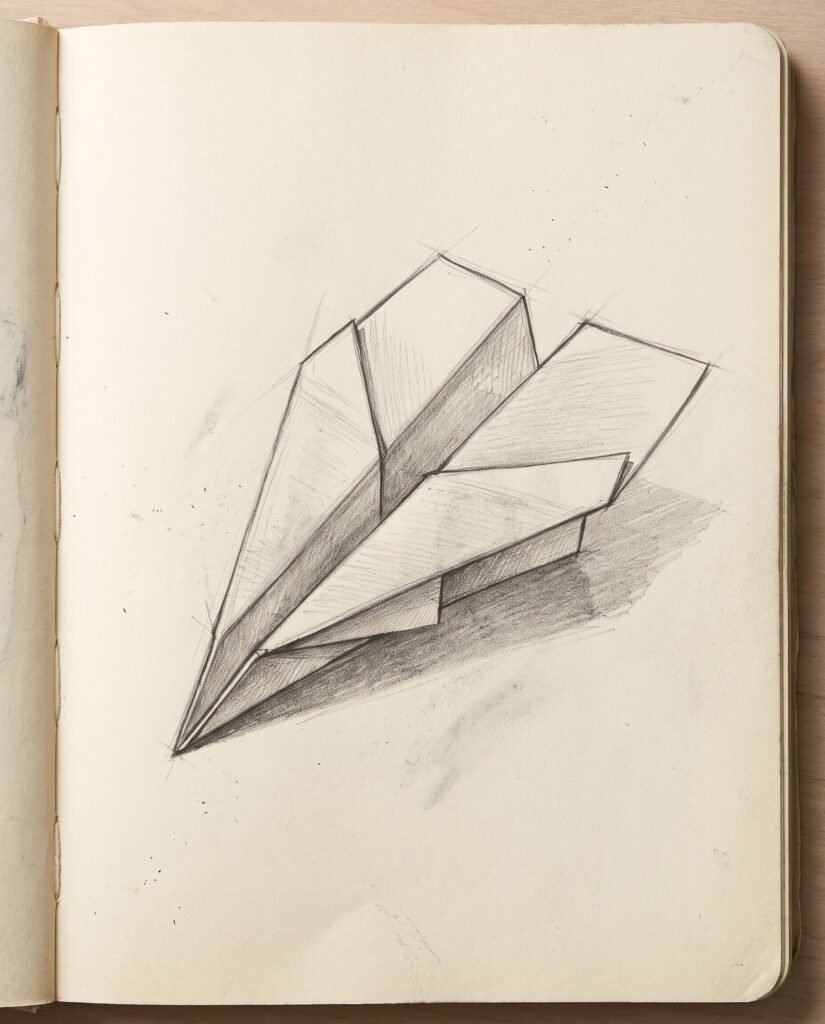
11. A Folded Paper Airplane
A paper airplane offers a satisfying set of crisp angles and a small lesson in symmetry. Lightly draw the long central crease first, then connect the pointed nose to the outer wing corners. If you angle the plane in space, compare the apparent widths of the two wings rather than making them mechanically identical. Add a little graphite along the folds to explain which plane overlaps another. Leave the paper itself mostly white; the shadows define the form.
12. A Cozy Desk Lamp
A desk lamp gives you simple shapes to draw and a clear reason to think about lighting. Build it from a weighted base, a stem, and a tilted lampshade. Check where its joints connect before refining the outline. Shade the inside of the lampshade darker than the outer surface, and let the light fall across a small oval patch of tabletop. You can draw this entirely in pencil, using just three values—light, middle, and dark—to keep it manageable.

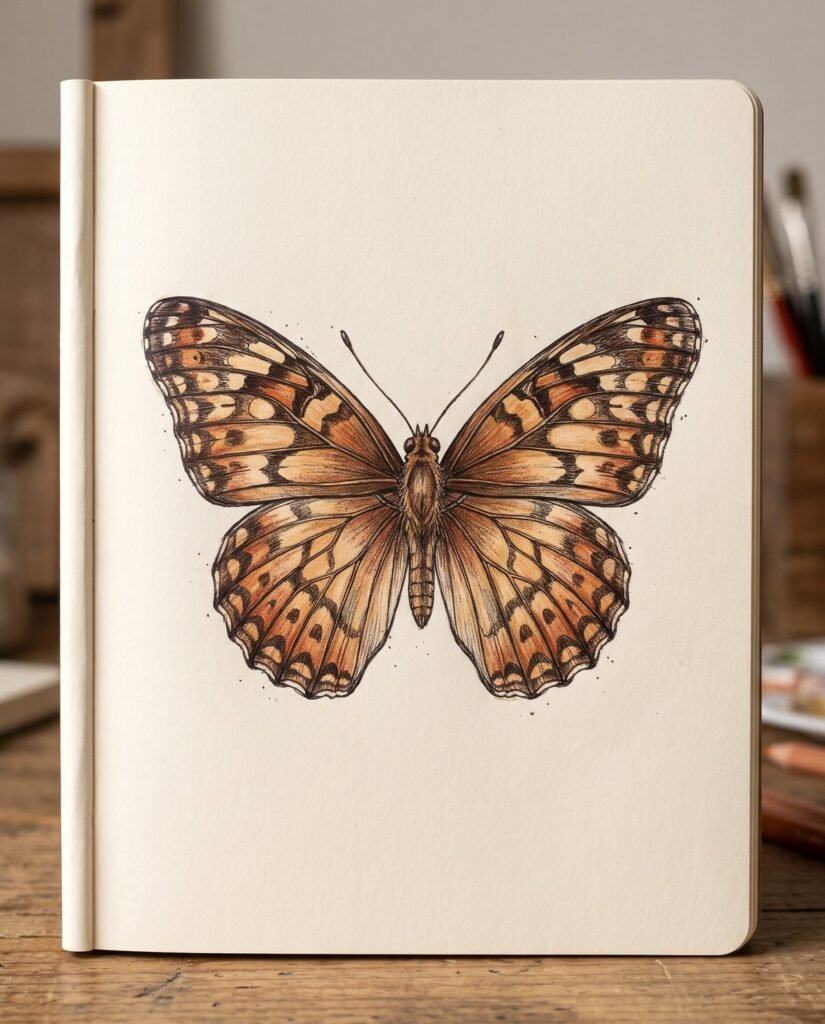
13. A Butterfly With Patterned Wings
Begin with a slender body and a light vertical center line, then draw the large upper wings and smaller lower wings on either side. The shape should feel balanced, but it does not have to be mathematically mirrored. Divide the wings into a handful of large patterned sections before adding spots or fine borders. A restrained palette of rusty orange, cream, and dark brown looks lovely, though black pen works just as well. Focus on clear wing shapes before decorative detail.
14. A Row of Miniature Windows
Imagine four windows on different little buildings: one arched, one shuttered, one full of plants, and one with a striped awning. Give each miniature drawing its own small space on the page, like a collection of architectural postcards. Establish the outer frame first and keep verticals vertical when the windows are viewed straight on. Different silhouettes and accessories help each one read as a distinct idea. A few shaded recesses provide depth without requiring complex city perspective.

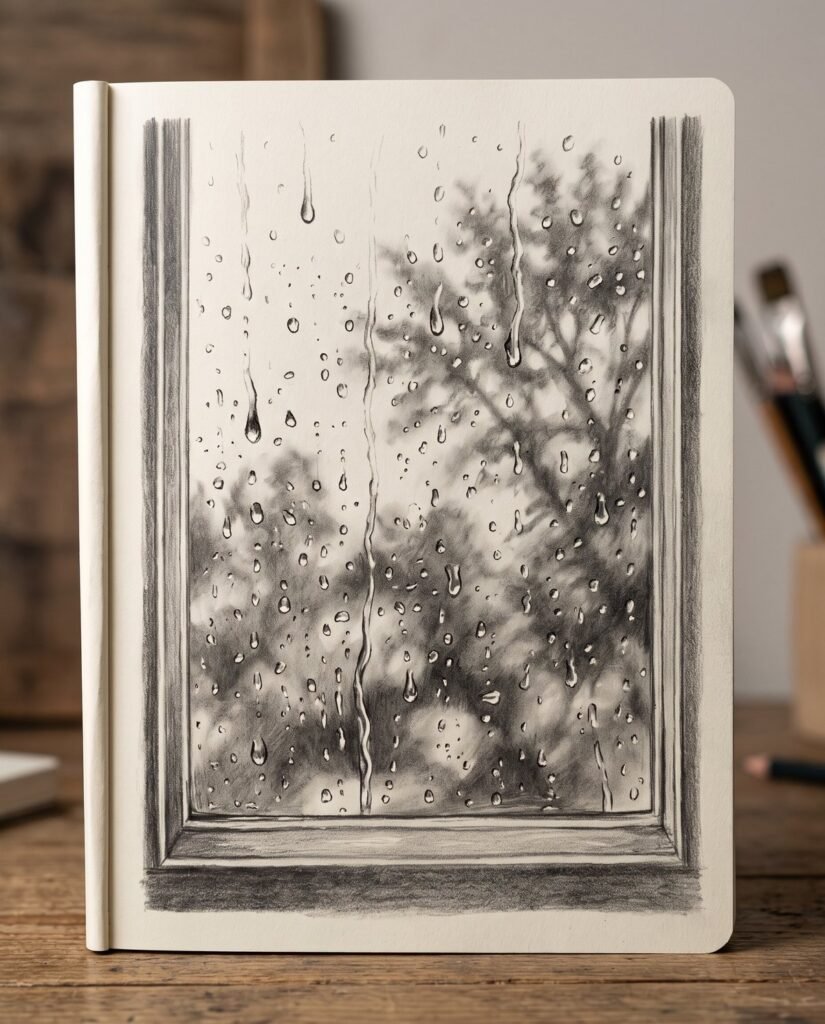
15. A Rainy Window With Droplets
Try drawing what you see through a rain-speckled pane rather than outlining every object beyond it. Place several larger droplets and a handful of tiny ones across the foreground. Behind them, suggest a soft skyline or distant trees with faint smudged graphite shapes. The trick is to keep the background low-contrast so the droplets appear closer to you. This one can stay abstract, and a blending stump or clean tissue makes the hazy background especially quick to create.
16. A Sleeping Cat in One Continuous Pose
A curled-up cat makes a beautiful exercise in reading the whole silhouette before getting distracted by whiskers. Start with one large oval gesture describing the body, add the rounded head tucked toward the paws, and place the tail where it naturally wraps around. Use a reference of an actual sleeping cat to keep the limbs believable. A few soft patches of shading show the fur direction; avoid drawing every individual hair. The finished sketch should feel restful and recognizably feline.

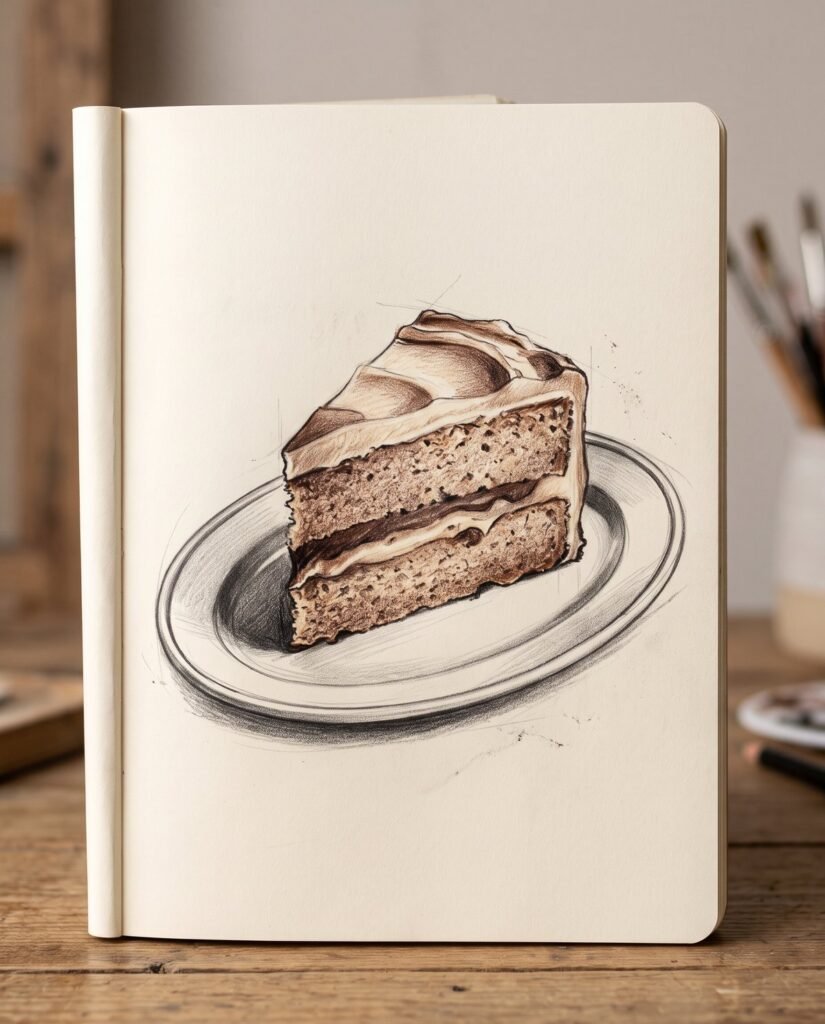
17. A Slice of Cake on a Plate
This cheerful subject combines clean geometry with softer organic marks. Draw the triangular wedge first, checking the angle of its two cut sides, and then sketch the plate as a shallow ellipse. Two visible cake layers and a swirled frosting top are enough to communicate the texture. Use short pencil strokes for crumb and smoother shaded bands for filling. Leave a bright highlight along the icing to separate it from the darker layers beneath.
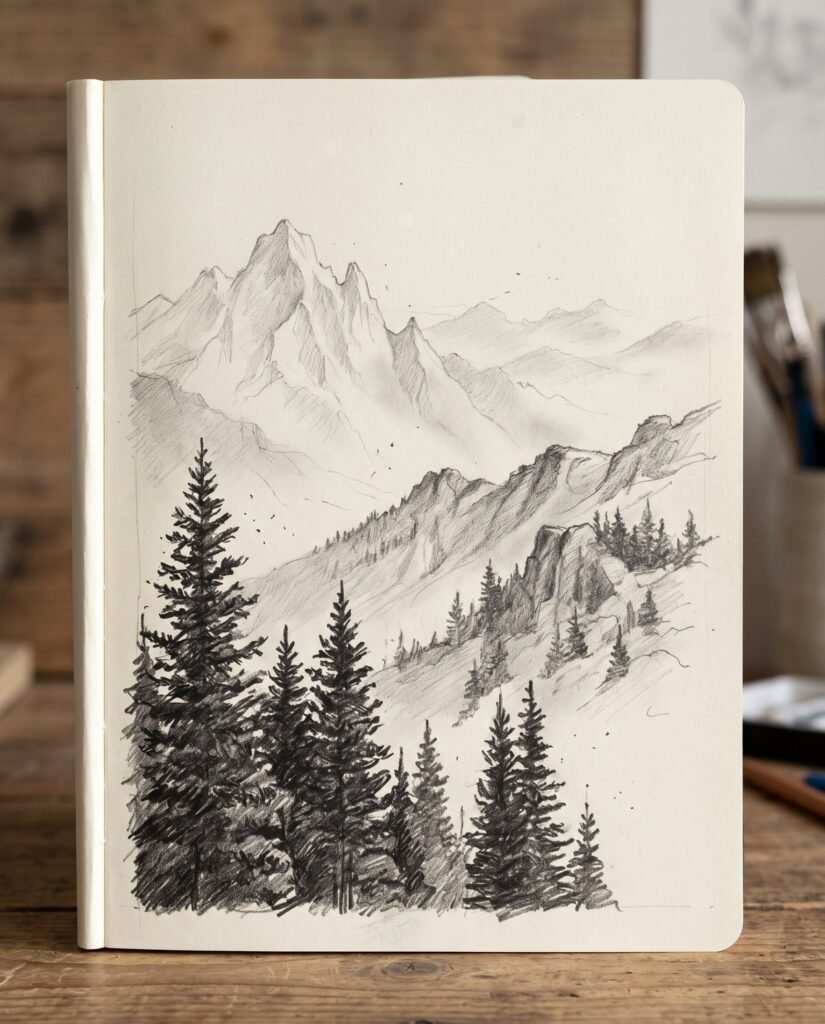
18. A Mountain Landscape in Three Layers
You do not need to draw an enormous landscape to create a sense of distance. Begin with a low foreground hill, add a midground ridge that overlaps it, and place a taller mountain silhouette behind both. Make the distant mountain lighter and less detailed than the nearer shapes. A few pine-tree marks in the foreground are sufficient to set the scale. This is a good place to experiment with broad side-of-pencil shading instead of tracing every edge heavily.
19. A Whimsical Teacup Garden
For a more imaginative prompt, draw a teacup with tiny flowers and leaves growing out of it, as though the cup were a miniature planter. Start with an ellipse for the rim and a curved bowl shape, then attach a readable handle. Vary the height of the stems so the composition does not look like a row of identical flowers. A couple of little stones or dots of soil help the scene make sense. It is playful without being technically demanding, especially in colored pencil.

20. A Doorway Leading Somewhere Unexpected
Finish with a little story prompt: a narrow door opening onto a starry sky, a garden path, or a distant hill. Draw the doorframe as a simple rectangle and use a single consistent perspective if the doorway has visible depth. Make the outer wall restrained so your imagined view becomes the focus. A dark doorway silhouette with a lighter landscape beyond is effective in pencil or ink wash. The story is yours to choose, which makes this a good idea to revisit on different days.

How to Choose a Drawing Idea When You Feel Stuck
If you want a quick win, choose one object with a clear silhouette: the mug, leaf, cactus, or paper airplane. For shading practice, try the lamp, glass jar, or stack of books. For something more imaginative, pick the teacup garden or mysterious doorway. Limiting your choice to one of these three moods—quick, observational, or playful—can make the blank page feel less overwhelming.
To get started, place the largest shapes lightly, check proportions, and add details. Try one quick sketch and one slower version of the same subject.
Final Thoughts on Finding Drawing Ideas When You’re Stuck
The best drawing ideas are the ones that get a mark onto the page. Each sketch offers a different kind of practice. Choose one subject today, keep the drawing small if that helps, and let the sketchbook grow one idea at a time.